This is a guest post by Søren Kamper of Star Wars: Gaming.
The neat thing about Star Wars: The Deckbuilding Game is that people rarely love the exact same bit of it. One player is there for the duel. Another enjoys the little thrill of buying the card their opponent desperately wanted. Someone else likes the faction tug-of-war, or the way a modest little hand of cards slowly turns into something mean and efficient. That is what made Dave’s What to Play After Catan piece such a clever model. You do not replace a favourite game with a single “next step”. You ask what part of the game people actually fell for in the first place.
So rather than produce a giant shopping list and hope something sticks, let us break this one down by appetite. If what you loved about Star Wars: The Deckbuilding Game was the knife fight across the table, there is a good next move for that. If it was the deck-building itself, there is a different one. If it was the joy of sabotaging a shared market and making your opponent sigh through their teeth, that opens another door entirely. And if what you really wanted was a little more time in that galaxy far, far away, we can point you in that direction too.
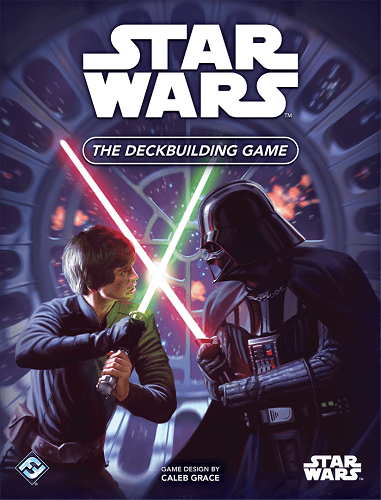
If you loved the straight-up two-player duel
Start with Radlands. It scratches a very similar itch, although it does so with far less deck-building and far more immediate violence. Like Star Wars: The Deckbuilding Game, it is a heads-up contest where every card matters and tempo swings can make you feel like a tactical genius one minute and a panicking moisture farmer the next. Radlands is wonderfully rude. Offence is usually the best defence, the board state is constantly threatening to collapse, and it rewards that same habit of looking across the table and asking, “What can I break before my opponent gets to enjoy it?”
If Radlands is the more aggressive cousin, then Air, Land, & Sea is the sharper little scalpel. It has only eighteen cards, which is always funny because it somehow still creates more tension than games with enough cardboard to tile a bathroom. If what you adored about Star Wars: The Deckbuilding Game was the back-and-forth duel and the feeling that every decision has consequences, Air, Land, & Sea is a brilliant next stop. It drops the market row and the deck growth, but keeps the delicious feeling of outplaying someone with a tiny hand and a nasty little grin.
In other words, pick Radlands if you want the same two-player hostility with more table presence, and Air, Land, & Sea if you want the same tension compressed into a box that could fit inside your jacket pocket and still have room left over for contraband.

If you loved tuning your deck, turn after turn
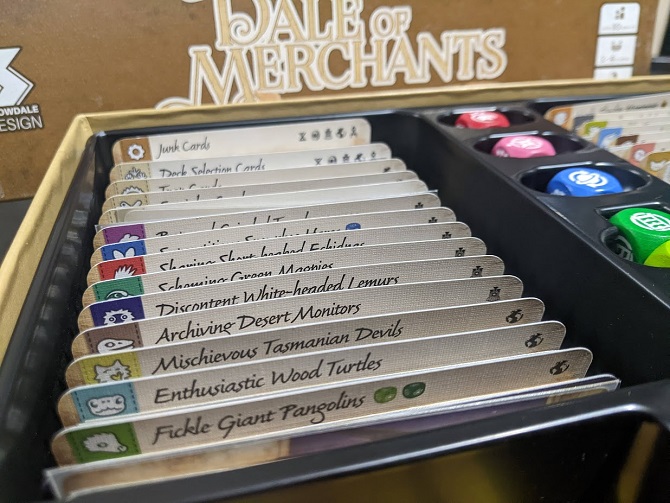
Then the obvious call is Dale of Merchants. Dave described it years ago with great enthusiasm, and he was right to do so. This is proper deck-building. Not deck-building as a garnish, not deck-building that disappears behind some louder gimmick, but deck-building as the whole meal. Cards enter your deck for a reason, cycles matter, and the puzzle is not simply about buying strong effects. It is about buying the right effects in the right order and knowing when your cute little animal enterprise is actually becoming a machine.
What makes Dale of Merchants such a good recommendation after Star Wars: The Deckbuilding Game is that it preserves the satisfaction of sculpting a deck without requiring you to pretend that every game should involve a thousand moving parts. It is still accessible, still charming, still relatively breezy, but the decisions go deeper. If Star Wars gave you the taste for watching your deck become leaner and more purposeful, Dale is the game that says, “Excellent, now let’s take the stabilisers off.”
A slightly bigger step is Dune: Imperium. This is for the player who liked the deck-building in Star Wars: The Deckbuilding Game, but kept wondering what it would feel like if those card choices fed a much larger strategic machine. Dune: Imperium turns every purchase into a broader political and military calculation. It is richer, nastier, and more exhausting in a good way. Not everyone wants that after a thirty minute duel. But if you do, there is a reason it sits so high in Roll to Review’s rankings. It is deck-building growing up, putting on a suit, and immediately starting an argument over desert influence.
If you loved the shared market, especially when it let you ruin someone’s plans
This is the sneaky heart of Star Wars: The Deckbuilding Game. The card row is not just a shop. It is a battlefield. You buy a card because you need it, yes, but also because the person opposite you would enjoy having it even more. That little act of theft by timing is half the charm.
If that was your favourite part, go to Tyrants of the Underdark. Tyrants takes deck-building and bolts it to area control, which is a marvellous way of ensuring that every improvement to your deck has an immediate board consequence. It also means the market row matters twice over. You care about what helps you, and you care just as much about what it denies everybody else. It is a banger of a game, to borrow the local technical term, and a perfect recommendation for anyone who likes their deck-building with a bit of elbows-out nastiness.
Another strong option is Clank!. Clank! is not as pure a follow-up if all you want is razor-sharp card play, because the board and the push-your-luck adventure take up a lot of oxygen. But if your favourite Star Wars moments came from eyeing that card row, grabbing the perfect toy, and then watching the table react, Clank! carries a similar charge. It turns the deck into your engine for movement, risk-taking, and occasional greed-fuelled catastrophe. Which, to be fair, is a very respectable use of cardboard.
This is also the point where Roll to Review’s engine-building explainer becomes useful. Games like Star Wars: The Deckbuilding Game often work as a gateway into broader card and engine systems, and understanding that family resemblance helps you know whether you want your next game to stay clean and focused or balloon outward into something grander and messier.

If you want deck-building to power something bigger
This is where Clank! and Dune: Imperium really earn their keep, but there is another reason this branch matters. Some people finish Star Wars: The Deckbuilding Game and realise what they actually liked was not the purity. It was the hint of a bigger world. The sense that cards could be doing more than trading blows.
Clank! is the obvious adventure answer. Your deck is no longer merely your weapon. It is your movement, your noise, your greed and, depending on how badly things go, your explanation for why you never made it out of the dungeon alive. Dune: Imperium is the strategy answer. There the cards are almost a diplomatic language, shaping where you can go, what you can buy, and how convincingly you can punch somebody in the conflict row without looking too desperate.
If you are the sort of player who enjoys saying, “I like this mechanism, now show me what else it can do,” these are the two games to keep on the front of the shelf. One sends deck-building on an expedition. The other sends it into a political knife fight. Both are very good uses of your evening.

If what you really loved was the Star Wars part
Then the answer is a little different, because no non-Star Wars game can quite replace the pleasure of seeing familiar factions, ships, and scoundrels turn up in the market row. In that case, the cleanest answer might not be another deck-builder at all. It might simply be more time spent in the broader Star Wars games archive. If the cardboard duel has reminded you how flexible the setting can be, our Complete List of All Star Wars Games Ever Made is a good rabbit hole to disappear into, whether you want to jump from tabletop back into strategy games, shooters, racers, or the occasional weird licensing tangent that could only have happened in the early 2000s.
That might sound like a dodge, but it really is part of the charm of Star Wars: The Deckbuilding Game. It is a good gateway game not only because it teaches people how fun shared-row deck-building can be, but because it reminds them that theme still matters. A sharp mechanism gets people to the table. A galaxy full of smugglers, stormtroopers and inconveniently dramatic family disputes helps them remember why they came.
A quick cheat sheet
If you want the shortest possible version, here it is. Choose Radlands for direct two-player aggression. Choose Air, Land, & Sea for a tiny duel with huge tension. Choose Dale of Merchants for purer, smarter deck-building. Choose Tyrants of the Underdark if stealing market opportunities is your love language. Choose Clank! if you want those cards to drive an adventure. Choose Dune: Imperium if you want deck-building to graduate into a full-scale strategic obsession.
That, to me, is the nice lesson here. Star Wars: The Deckbuilding Game is not one taste. It is several. Once you know which flavour hooked you, the next recommendation becomes a lot easier and a lot more useful.

 Loading ...