Your support keeps Roll to Review running! When you buy through our links, we earn a small commission at no extra cost to you and you help us bring more great games to the table. Full disclosure here.
Like a lot of people, I got my start playing board games with the game formerly known as The Settlers of Catan. These days, it’s just Catan. From there, I started branching out, but I quickly ran into a problem: I had no idea where to go next or what games I should try.
At first, I stuck with Catan, working my way through its expansions. I started with the 5-6 Player Expansion, then moved on to Seafarers and Pirates & Explorers. But eventually, I started trying other games. Ten years later, I’m still discovering new ones, writing about them and, most importantly, enjoying the hobby.
So this list is for anyone who finds themselves where I was a decade ago. You’ve played Catan, you’ve had a great time, and now you’re wondering, “What do I play next?” These are the games I wish someone had pointed me towards back then.
But there’s a little more to the format than simply listing ten games like Catan. Even after all this time, I don’t think there’s a true one-to-one replacement for Catan. Instead, I think the best way to work out what you should play next is to think about what you enjoy most about it. That’s how I’ve approached this list. I’ve broken Catan down into some of its key elements, with each section focusing on a different part of the experience. Find the one that sounds most like you, pick a game from that section, and give it a try. You might just find your next favourite.
Negotiation
While the joke of trading wood for sheep will never go out of style, the negotiation phase of Catan certainly did at my table. As soon as someone took the lead, trading was shut down faster than the Strait of Hormuz. But if you want more of that wheeling and dealing, there are plenty of games that put negotiation front and centre.
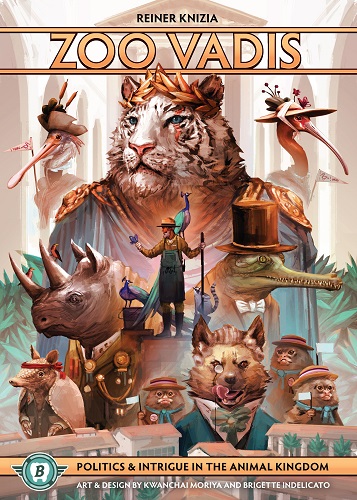
Zoo Vadis
Designer: Reiner Knizia
Player Count: 3-7
Play Time: 20-40 minutes
If you’ve ever wanted to role-play as a marmoset in a boating hat, or just cut the deal of the century, then look no further than Zoo Vadis. You take on the role of an animal aiming to work your way through the zoo and become its next top mascot.
However, you can’t get there alone, and you’ll need to trade actions, money and promises with the people around the table to make your way through the zoo.
What I loved about this game, outside of the amazing theme and artwork, is that nothing is off-limits. The only limit to crazy deals you can make is your imagination, whether that means making a mutually beneficial trade or convincing someone to do something that is very much in your favour. It’s a fantastic game of negotiation and trading.
Read my full Zoo Vadis review.

GoodCritters
Designer: Fabian Zimmermann
Player Count: 4-8
Play Time: 30-45 minutes
You’d think the hardest part of a bank heist would be the robbery itself. In reality, it’s probably figuring out how to divvy up the loot once you’re back at the hideout. That’s GoodCritters.
One player takes on the role of the leader, who has to negotiate with the rest of the table and decide how the loot will be divided. Once the deal is set, the other players can steal from one another, guard their stash, or even vote the leader out of position.
It’s a no-holds-barred game of negotiation that might start pleasantly enough, but before long everyone will be trying to make sure they’re the one walking away with the biggest cut. If you enjoy the deal-making side of Catan, GoodCritters takes that idea and turns it into the whole game.
Dice rolling
There’s something satisfying about watching the dice land on a number you desperately need and suddenly seeing your hand fill up with resources. Of course, the dice don’t always agree with your plans. Some of my least favourite games of Catan were the ones where I’d only managed to collect a couple of wheat while my friend sat across the table with handfuls of brick and stone.
These next games strip away everything else from Catan, leaving the satisfying dice rolling at the heart of the experience and then building on it in their own ways.
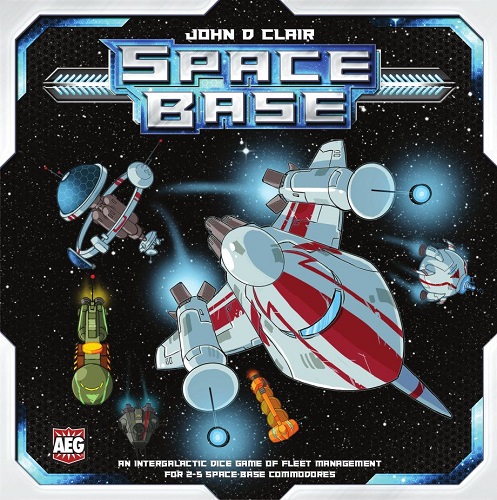
Space Base
Designer: John D. Clair
Player Count: 2-5
Play Time: 60 minutes
Space Base takes the dice rolling and resource collection of Catan and ramps it up to 11. Instead of having numbers from 2 to 12 scattered around a shared island, you have all possible dice results laid out on your player board, and you gain resources every single time the dice are rolled.
You’ll spend those resources upgrading different spaceships, which fill the slots on your player board. The more you upgrade, the more rewards you’ll get whenever those numbers are rolled, creating a lovely little engine that gets bigger and better as the game goes on.
Eventually, you’ll either win the game or lose track of how many resources you’re getting every turn. Both are perfectly valid Space Base experiences.
Read my full Space Base review.
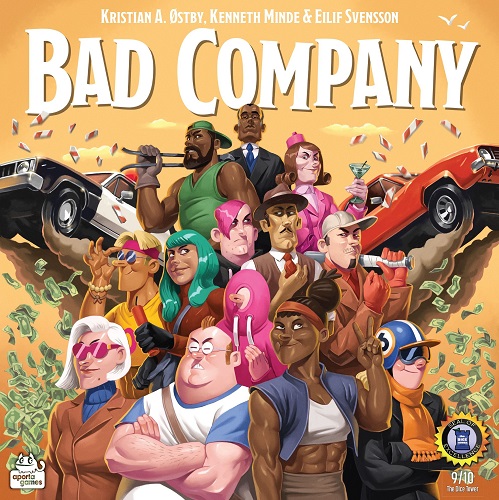
Bad Company
Designers: Kenneth Minde, Kristian Amundsen Østby, Eilif Svensson
Player Count: 1-6
Play Time: 30 minutes
Full disclosure, I haven’t played Bad Company yet, but it’s been sitting on my wishlist for a while and has received rave reviews elsewhere. It’s part of the same dice-driven family as Machi Koro and Space Base, where rolling the dice activates spaces on your player board and generates resources.
The big difference is that instead of building a little city or space fleet, you’re putting together a gang of criminals while trying to pull off heists and stay one step ahead of the cops. You’ll recruit new gang members, collect loot and build up your crew, all while trying to make your criminal empire the most successful at the table.
If you like the satisfying feeling of rolling dice and watching your engine fire, Bad Company looks like a particularly fun next step from Catan.
Route building
These titles are for those who love building the Longest Road, or those who love using careful route planning to hem other players into weird positions where they can no longer expand. And if you’re in that second category, know that I don’t like you.
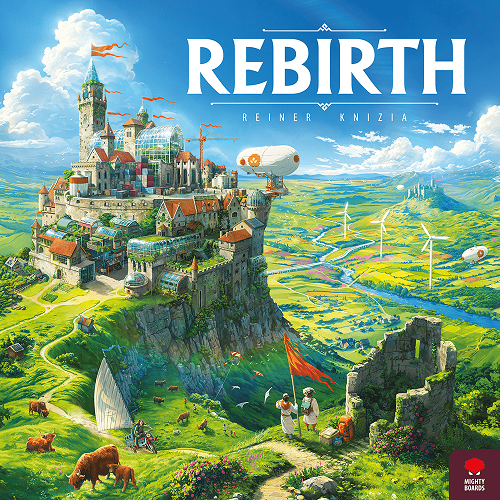
Rebirth
Designer: Reiner Knizia
Player Count: 2-4
Play Time: 45-60 minutes
Winner of the 2026 Kennerspiel des Jahres (Hobby Board Game of the Year), Rebirth is one of the most gorgeous games I’ve played. But more than that, it gives you plenty of opportunities to build your own routes as you rebuild Scotland, stringing together different types of farms while completing objectives to score points.
It’s a really simple game to play. Draw and play one tile each turn. That’s it. However, each tile presents you with so many options that you’ll still find yourself scratching your head over where to put it. I thoroughly enjoyed this one, and if you love building routes and squeezing every last point out of your network, I think you will too.
Read my full Rebirth review.

Blue Lagoon
Designer: Reiner Knizia
Player Count: 2-4
Play Time: 30-45 minutes
I’m sure it’s a bit of a faux pas to list two Reiner Knizia games in a row, but damn it, the guy knows how to make great route-building games. Blue Lagoon is hands down one of my favourite family games, and if Rebirth sounds a bit too complicated, this one is well worth a shot.
Blue Lagoon consists of two phases. In the first, you send your tribe out to explore an archipelago, collecting different resources and creating villages along the way. In the second, you remove everything from the board except your villages and do it all again. Except this time, you can expand out from the villages you’ve already established.
It’s smart, colourful and packs far more strategy into its simple rules than you’d expect. If you love the thrill of building the Longest Road in Catan, but want something a little lighter, Blue Lagoon is a fantastic board game to start with.
Read my full Blue Lagoon review.
City planning
When you’re not building roads or rolling dice, you’re putting down settlements and eventually turning them into cities. These games take that idea and run with it. Instead of simply swapping wooden tokens for resources, you’re building a city where real wooden meeples live and work.
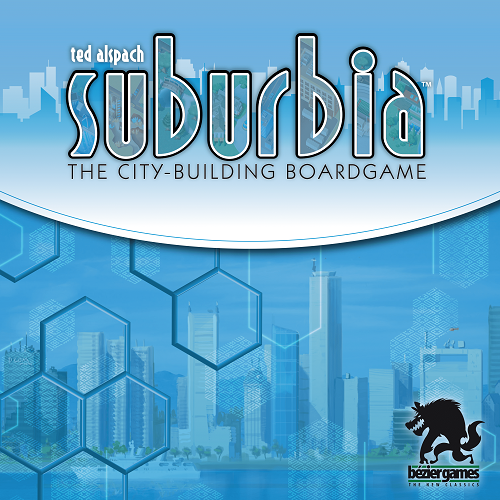
Suburbia
Designer: Ted Alspach
Player Count: 1-4
Play Time: 60-90 minutes
Suburbia is the quintessential city builder. You’ll manage your population and income as you piece together different hexes, each providing its own benefits or liabilities. Because if you put the city dump next to the residential area, your wooden people aren’t going to be happy.
The main draw of Suburbia is watching your city come together piece by piece, starting with just three tiles and slowly growing into a sprawling metropolis. Every new tile changes the way your city works, so you’re constantly weighing up what will help you now against what might make your city better in the long run.
With the new edition released a couple of years ago, there’s never been a better time to pretend you know what you’re doing as a city planner.
Read my full Suburbia review.
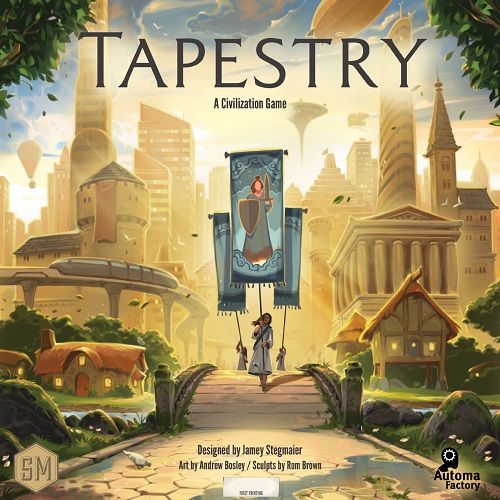
Tapestry
Designer: Jamey Stegmaier
Player Count: 1-5
Play Time: 90-120 minutes
This may be a controversial pick among board game enthusiasts, but I love Tapestry, and I think there’s a good chance you will too if you’re coming from Catan.
It isn’t exactly city building, but it has that same feeling of progression you get from Catan. On the first turn, you’ve only got your two settlements, but by the end you’ve covered half the map in wooden tokens.
Tapestry takes that feeling of progression and applies it to building a civilisation, boiling the whole idea down to its very essence. Each turn, you’ll spend resources advancing along four different tracks: military, science, technology and exploration. As you do, you’ll expand your civilisation, fill your capital with increasingly ridiculous buildings and pick up all sorts of special powers along the way.
It’s the kind of game where you start with a few sticks and end up in space. Except, unlike some civilisation games, it doesn’t take a PhD to learn how to play.
Something different
These titles don’t have any special connection to Catan. They’re simply a couple of my personal recommendations that I think are well worth a look if you’re a fan of Catan and want to try something a little different.

Dorfromantik: The Board Game
Designer:s Michael Palm, Lukas Zach
Player Count: 1-6
Play Time: 30-60 minutes
Dorfromantik was one of my favourite board games that I played in 2024. It’s one I played with my family over the course of a couple of months because it’s just so relaxing and pleasant.
It’s stress-free cooperative gaming, where you’re building out an ever-growing landscape one tile at a time. As you do, you’ll unlock new objectives that you need to complete for points. Before long, you’re on the hamster wheel of creating a beautiful little vista while constantly trying to complete the next objective.
It’s a wonderful game that deserves more love, and a great choice for after a particularly tense game of Catan.

Takenoko
Designer: Antoine Bauza
Player Count: 2-4
Play Time: 45 minutes
Takenoko is a family night favourite in our house. We’ve owned this game for over a decade and still occasionally bring it out to play. It’s not overly complicated, but there’s enough going on that you’ll still find yourself mulling over your turns, while watching someone else take theirs.
Players share a bamboo garden containing both a gardener and a panda. The gardener is busy growing the garden, while the panda is just looking for their next feed. You’ll move the two of them around the garden while trying to complete different objectives.
Takenoko is not only fun, but looks absolutely stunning on the table, with the bamboo shoots giving the board some real height. It doesn’t have the trading or dice rolling of Catan, but it has that same satisfying feeling of coming up with a strategy and watching it unfold. And, much like Catan, it’s easy to teach, difficult to completely master and works brilliantly as a family game.
Read my full Takenoko review.
There’s no single game that can replace Catan, but hopefully one of these gives you somewhere to go next. It’s a big board game world out there, so pick a game, grab some friends and start exploring.
And who knows, maybe ten years from now you’ll still be playing, still discovering new games, and wondering how your board game shelf got quite so bloody big.

 Loading ...