It’s board game night – the best night of the year. The table’s buzzing with chatter, laughter, and the sweet satisfaction of good company. But there’s one problem: you’re taking forever to make your move. You know it, everyone else knows it, and now the mood’s shifting. What was once lively banter has devolved into snarky comments about how you’re giving Flash from Zootopia a run for his money.
Don’t worry – you’re not alone. I’ve seen plenty of friends and co-workers wrestle with the same struggle: balancing quick thinking with solid decision-making. Luckily, there’s hope! This article is packed with practical tips to help you stop over thinking, make faster choices, and banish analysis paralysis for good. Let’s get started!
What is Analysis Paralysis in Board Games?
Ever find yourself paralysed between two options—whether to launch an attack or hold back and defend? You retreat into your own thoughts, weighing every possibility, until time seems to vanish and you’re still stuck. That, my friend, is analysis paralysis. An occasional long turn is no big deal, but for some players, it’s an every-turn ordeal. Before you know it, what should be a lively game becomes a tedious, hour-long slog.
And the effects don’t stop at the game table. Analysis paralysis takes a toll on you, too. According to Becky Kane, overthinking:
- Lowers your performance on mentally demanding tasks
- Stifles creativity
- Drains your willpower
- Makes you less happy
Sound grim? Don’t worry—we’ve got the antidote. Let’s dive into some practical strategies to kick analysis paralysis to the curb and get your game flowing again.
Sliding Doors: The Amazonian Method
I recently read Invent and Wander: The Collected Writings of Jeff Bezos. While much of it felt like Bezos flexing about Amazon’s success, there were some golden nuggets worth noting – one of which is Amazon’s decision-making framework.
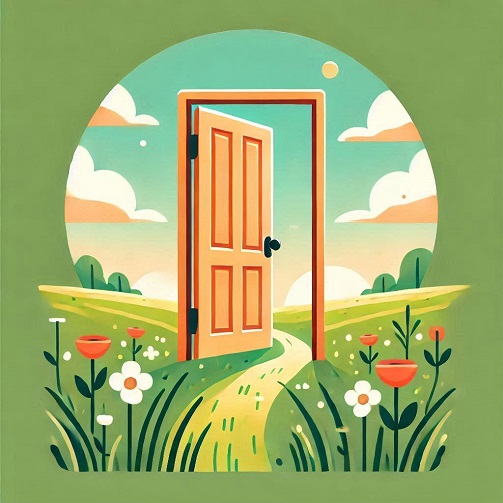
According to Bezos, decisions fall into two categories: one-way doors and two-way doors. Two-way doors are low-stakes choices – you can walk back through the door if things don’t pan out. For these, you don’t need all the facts. A quick decision based on 40% of the available information will usually suffice.
One-way doors, on the other hand, are high-stakes and irreversible. Once you step through, there’s no turning back, so these decisions require careful thought and as much information as you can gather.
The problem? Many people approach two-way doors as if they’re one-way, overanalyzing low-risk situations and grinding progress to a halt.
In board gaming, most decisions are two-way doors. Take Small World, for instance: most turns involve placing tokens on the map. If you make a suboptimal move, you might lose a few points – no big deal in a game where scores easily top 100. That’s a two-way door decision.
But some moments demand one-way door thinking. Going back to Small World, when you’re out of tokens or retiring your army, you get to choose the next army you command, setting up your next three or four turns. In these cases, the stakes are higher, and a one-way door approach is warranted.
While Small World illustrates this concept clearly, the principle applies across most strategic board games. Recognizing the difference between reversible and irreversible choices and tailoring your decision-making to match can save you (and your fellow players) a lot of time and frustration.

Take Your Ego Out of the Equation
One of the main culprits behind overly long turns is ego. For some, every move feels like a public display of their intelligence or value as a person. Winning becomes more than a game – it’s a statement.
Sure, this mindset might fly in competitive tournaments or high-stakes games where everyone’s on the same page. But when you’re playing with friends or family, it’s time to let that go. No one really cares if you win or lose board game night. And if they do, they can go sit on a mid-sized cactus (preferably pointy).
So, here’s the first step: get used to losing. Or better yet, stop thinking about winning and losing altogether. Shift your focus to what truly matters – enjoying the game, exploring its mechanics, and connecting with the people around you. When you embrace the experience over the outcome, the pressure to make the “perfect” move simply melts away.
Of course, this isn’t always easy. Letting go of your ego means grappling with your emotions, which can feel like uncharted territory. If that sounds intimidating, mindfulness is a great starting point. I’ve had success with the Headspace app, which not only taught me how to meditate but also how to recognise and regulate my emotions.
I’ll admit, even typing that out feels a bit “crystals and sage,” but stick with me. Mindfulness is less about zoning out and more about observing. Imagine your thoughts as cars on a highway. Instead of jumping into every car like you’re in a chaotic action movie, you sit calmly by the roadside and let them pass—no need to chase after every fleeting idea.
This practice hasn’t just helped me with board games but also in emotionally charged situations. When I feel anger bubbling up or some other unpleasant emotion rearing its head, mindfulness helps me spot the signs early. Once I notice them, I can step back and deal with them in a calm and controlled way.
Now, back to board games and analysis paralysis. If “needing to perform well” is the reason you take forever on your turns, mindfulness can help you recognise that pressure before it derails you. By catching those feelings early, you can stop overthinking in its tracks and play the game without getting bogged down by your inner perfectionist.

Narrowing Down Your Options in Board Games
Analysis paralysis often strikes when there are too many choices on the table. You feel compelled to weigh every possibility, explore every pathway, and account for every outcome. Pretty soon, your mental traffic jam has brought the whole game to a screeching halt.
One way to sidestep this spiral is to use artificial filters—essentially a set of rules or guidelines to narrow your options.
Here’s how I do it: before my turn, I define a high-level strategy. For instance, in one game, I might decide to focus on aggression; in another, I might prioritise building a strong economy. From that overarching strategy, I break things down into smaller, more manageable objectives. Each turn then becomes a simple question: What’s the quickest way to move toward my goal?
By having both long-term and medium-term targets, I can quickly eliminate choices that don’t align with my strategy. Usually, this process leaves me with just one to three viable options to consider each turn.
But don’t just take my word for it. The Exploring Your Mind blog recommends asking yourself three key questions to sharpen your decision-making:
- What are you trying to achieve?
- How are you going to achieve it?
- What are the short- and long-term benefits of this decision?
Applying these filters simplifies your thought process and keeps your turns snappy.
Of course, understanding these techniques is only half the battle. To see real improvement, you need to put them into practice. As Tony Robbins famously said:
“Knowledge is not power. It is potential power. It is the application of knowledge that leads to power”
So, let’s not just think about playing better—let’s actually play better.

Wrap-Up: Level Up Your Gameplay and Share Your Thoughts!
And there you have it! Whether you’re playing with family, friends, or competitive rivals, conquering analysis paralysis is all about making decisions faster and smarter – without losing sight of the fun. By applying these strategies, you’ll not only become a better player but also help everyone enjoy the game more.
Now it’s your turn: What’s your biggest challenge with analysis paralysis? Share your thoughts in the comments below! And if you found this article helpful, don’t forget to share it with your gaming group. Let’s make game nights better together!

 Loading ...