
When I Dream
Players: 4-10
Playing Time: 20-40 minutes
Designer: Chris Darsaklis
Publisher: Repos Production
When I Dream has all the markings of a great party game but has some quirks that make you think twice, such as the blindfold, and the scoring mechanisms. Shifting it from being a good party game to just an OK one.
Pros
- Three distinct roles offer a unique perspective on the puzzle
- Knowing who to trust and who not to is fun for both the Dreamer and everyone else at the table
- Makes for a fun party game, it’s quick, easy to learn, and generates laughs
Cons
- Embarrassing to put a blindfold on in front of your friend group
- The scoring system is too easy to game
- Not too much replayability compared to other party games
- Components didn’t hold up well in Australian temperature
Love our reviews? Buying through our links earns us a small commission at zero extra cost to you, helping us table the next big release! Full disclosure here.
When you think of party games, you usually think of loud music, red cups, and pookah shells. What you don’t think of is being blindfolded while your friends yell random words at you, this is exactly what When I Dream brings to the table.
It’s a role-based party game, where you’re either a fairy, sandman, boogeyman or the unlucky sod who dons the blindfold and becomes the Dreamer. After roles are handed out, you flip the sand timer and non-blindfolded players take turns hucking words at the Dreamer like it’s verbal dodgeball.
The fairies are trying to get the Dreamer to guess the word currently on the top card of the dream deck. While they do so, the boogeymen are out to make sure this doesn’t happen. Meanwhile, the sandmen jump between the two roles hoping to keep the score as even as possible between the fairies and the boogeymen.
At any time, the Dreamer can guess the current word or pass. On a correct guess, the card goes into the yellow happy box, while incorrect guesses go into the blue nightmare box. Passing also puts the card in the nightmare box. This is fair enough because you should never give up on your dreams.
After time runs out and before the Dreamer takes their blindfold off, they get a bonus round where they can correctly guess all cards in the yellow happy box. Then they earn themselves a couple of extra points.
Otherwise, fairies and the Dreamer get one point per card in the happy box. The boogeymen get one point per card in the nightmare box. While the sandmen get points based on the difference between the two piles.
After points are divvied out, the blindfold gets handed over and a new round begins. Once everyone has a turn in the dark, then everyone counts up their points to find the winner.
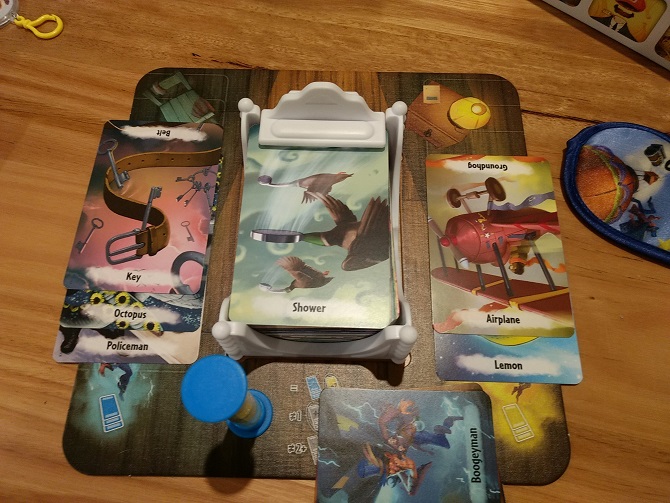
Broken dreams and broken components
It’s clear that When I Dream is a board game from the pre-COVID days. A simpler time when we weren’t so cautious about sharing masks or coughing into each other’s mouths.
Even still, this blindfold is both a blessing and a curse. It adds novelty and induces a fun kind of stress when it removes your sight. Leaving you wondering what everyone else is doing. Also, without the constant distraction your eyeballs afford you, you’ll notice yourself leaning in and being more engaged with the other players.
Yet at the same time, it’s embarrassing to put the blindfold on. Having no idea what’s going on around you is uncomfortable. Especially when playing When I Dream in public. So it creates a barrier to entry for the game, which is something I’m never a fan of.
Even worse than that though was my mask broke after only the second game. A sign of poor quality that carried over to the sand timer as well. As it stopped intermittently throughout our plays. However, that may be in part due to our Australian humidity, which at times feels like you’re walking through jelly.
While I’m usually not fussed by a broken component here or there. In When I Dream it became too difficult to ignore. The sand timer stoppages impacted the gameplay to the point where it became imbalanced.
Outside of these component hiccups, the gameplay in When I Dream can be a good time. As the Dreamer, guessing words isn’t as straightforward as it appears. As not only are you trying to get the word right, but you’re also listening out for who you can and can’t trust.
However, you can’t spend too long figuring out who’s who, as you need to be guessing words. Each second you’re not guessing is a potential point going down the drain. This leads to the crucial decision of when to guess, as too soon and you haven’t heard enough truthful information. Too late, and you’re wasting your precious seconds.
Finally, once the round is over you get to piece together what you remember from the craziness that just unfolded. As an onlooker, it’s fun to hear the stories the Dreamer comes up with as they stumble through both correct and incorrect answers. Often sounding like someone taking hallucinogens at the height of a fever dream.
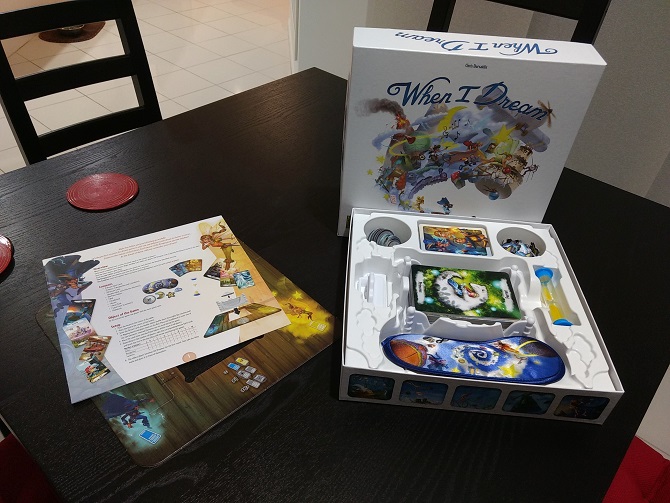
Judge, jury and executioner
What I find interesting about When I Dream is how each role brings a new perspective to the same activity.
As a fairy, you’re trying to get someone to guess one word out of the 171,476 words in the English language. But if that wasn’t hard enough, you also want to give clues that out the boogeymen. Either by refuting their clue, or making it impossible for the Dreamer to get it wrong.
On the other hand, as a boogeyman, you need to be subtle in your misdirection. Like a job interview, outright lying is obvious and you’ll be caught out. However, embellishing the truth, or some slight misdirection is fine, if not encouraged.
One example I’m proud of, but probably shouldn’t be, was when the answer was ‘gorilla’. The fairies threw out words like hairy, monkey, and big. When it came to my turn I said orange, leading the Dreamer to immediately guess ‘orangutan’. Much to my delight, and the dismay of all the furious-looking fairies surrounding the table.
Meanwhile, the sandmen get to play Judge Judy and Executioner. Siding with whichever faction is behind, they get the best experiences of both previous roles.
Each of these roles brings a delightful spice to the game, but the scoring system leaves a bitter taste in my mouth. Mainly because the winning strategy of When I Dream doesn’t align with what makes it fun.
As the Dreamer, you and the fairies get the same amount of points. Except you get extra for guessing correctly all the cards during the bonus round. So if you guess one card correctly and then run down the clock. You could end up with three points compared to the one point other players might get. Now, this isn’t in the spirit of the game. But the rules of When I Dream do nothing to stop this.
When I Dream isn’t without its flaws, yet it still hits all the beats of a good party game. It’s easy to teach, has a novel gimmick, there’s teamwork, and it has a quick consistent pace. Beyond that, it has moments of fun and moments of laughter. The only question you need to ask is how comfortable you are with being blindfolded.
Similar Games You Might Like

Long Shot: The Dice Game Review – Pure Trackside Energy in a Small Box
Hoot and holler as dice push horses down the track, then dump cash on one stallion. A chaotic, rowdy party game that rewards going all-in.

The Fuzzies Review – When the Jenga Formula Goes Too Soft
Building gravity-defying towers with fluffy balls is breezy fun unless you have a pet that sheds. A hassle-free dexterity game lacking true drama.

Secrets Review – When Legendary Board Game Designers Miss The Mark
Interrupting trades with the UN token is glorious, but your agency ends right there. A middling party game that abandons its secret identities too soon.
A score tells you if it’s good, but the leaderboard tells you if it’s worth the shelf space.

 Loading ...

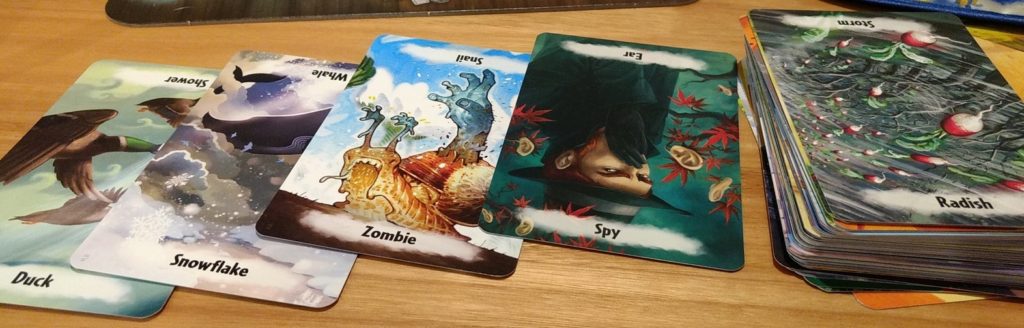
Fyi, you spelled Boogeyman wrong. It’s on the card in the second picture.
Or did I? It’s one of those words that has multiple spellings… So technically… Though not sure why I changed spellings mid way through. Good catch!
Nice review! Party games are always a tough pool to get to the good ones. Minimum 4 players would make this harder for me to play consistently, the mechanics and cards look real good.
I have this game in the back log sounds like it could potentially be a bit of fun on Christmas day. Providing I can sway the skeptics!
Nice review.
You should totally do it. I’m going to try it myself, best of luck to both of us. Let me know how you get on. 😛
Another fun review, if you csn keep this style up you’re onto a winner.
Haha thanks for the support Kevin. Really loving your comments!