
Secrets
Players: 4-8
Playing Time: 15-35 minutes
Designers: Bruno Faidutti, Eric M. Lang
Publisher: Repos Productions
Secrets on paper is a slam dunk, made by some of the best board game designers, with rules that make other games great. Yet somehow it all flounders by creating a rather disappointing experience.
Pros
- Awesome artwork and components that take you back to the 70s
- The initial phase of the game where you’re figuring out players’ identity is a lot of fun
- United Nations token that allows you to intervene when it’s least convenient
Cons
- The mystery of the game doesn’t last the duration
- Card powers randomly decide if you’re on the winning or losing side, creating a frustrating experience
Love our reviews? Buying through our links earns us a small commission at zero extra cost to you, helping us table the next big release! Full disclosure here.
There were many secrets during the Cold War. One of the most unethical was found hidden in a bunker below the outskirts of Berlin. Inside, the world’s brightest minds had tried to make the best board game ever.
Inside they found great games like Cockroach Poker, Mascarade, and Love Letter dissected. Their components and rule books littered the floor.
In a glowing green glass case in the centre of the room were the results of their experimentation. A Cold War social deduction game called Secrets.
How to play
It begins with you receiving a token telling you the team you’re on. You keep this facedown throughout the game, but during setup, the player on your left gets a quick peek. Likewise, you get a look at the person’s token on your right. You know, standard urinal behaviour.
This gives you some information but not the whole picture. That you must piece together by studying other players’ behaviours and actions.
When it’s your turn, draw two cards face up. These cards have some points and an ability. After everyone has a good look, hide these cards, shuffle them, and then give one facedown to another player.
That player can either accept the card and activate its ability, get its points, or keep the card in front of them. Or they can reject the card, in which case you activate it and get the points.
However, there is a third option.
Anyone with the United Nations Token can interrupt this ceremony and claim the card for themselves.
This continues until someone has five cards. Then everyone reveals their identity. If anyone has a hippy token, and the least individual points, they win. Otherwise, the team with the most points wins.

How to get off of a sinking ship
Secrets works best when it’s emulating a masquerade ball. When you’re surrounded by people hiding their identities. And you’re wondering, who are these people? Who’s friend, and who’s foe?
Although, like Cinderella, Secrets doesn’t stay at this ball long. Because within a few turns there’s usually enough information or intention on display to figure out who’s on whose side. In doing so, Secrets avoids the usual histrionics and emotional manipulation of social deduction games.
But at the same time, it sucks a lot of the enjoyment from the game. Instead of constantly wondering where you stand, you know exactly where you are, how many points your team has and who’s going to win.
So what starts as a social deduction game, turns into a game of passing your points onto your teammate. Or if there’s no way your team can win. Your next course of action is figuring out how to get off of a sinking ship.
Now, because the game loses its mystery so early on, it becomes evident to you, and everyone else, as to what your best move is. This ruins the guessing game of when to take a card, and when to push back on cards that works so well in Cockroach Poker.
Lastly, it ruins the finale. Usually at the end of social deduction games, the roles get revealed and you’re left gobsmacked when you find people weren’t who they said they were. However, in Secrets, there’s hardly any surprise at all.
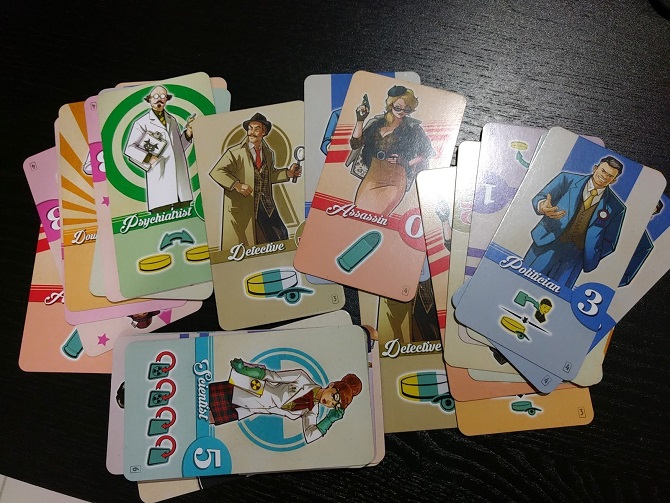
Can you lose control if you never have it?
The one mechanic that I fell in love with, and threw a wrench into so many plans, was the United Nations token. The most obvious strategy is to pass the best cards to your teammate. This token feels like two people were having a romantic night out when you pull up a chair at their table, using this token as a makeshift spoon to eat their food.
Unfortunately, this one mechanic isn’t enough to make up for the fact that you have no control over winning the game. You can always be screwed over by luck, or another player. Which can be a frustrating experience.
For example, if it gets revealed you’re the hippy early on. Expect no one to interact with you for the rest of the game. Likewise, when someone swaps your role on the last round making it so you’re now on the losing team. There’s nothing you can do.
These situations and others within Secrets remove player agency from the game. In turn, this removes the joy from the game as well.
Despite this, we never had an awful time with Secrets, but we never had a great time either. We just had a middling time, and in today’s landscape of party games, a middling time isn’t enough.
Similar Games You Might Like

Scape Goat Review – The Game That Forces You to Face Your Insecurities
Paranoia runs rampant during your first few sessions before pure logic breaks the mystery. A neat deduction experiment needing a sequel.

Arcadia Quest: Inferno Review – When Tabletop Hype Turns Toxic
Chuck buckets of dice to slay underworld bosses and hunt down rival heroes. A dungeon brawler that can be ruined by spiteful table politics.
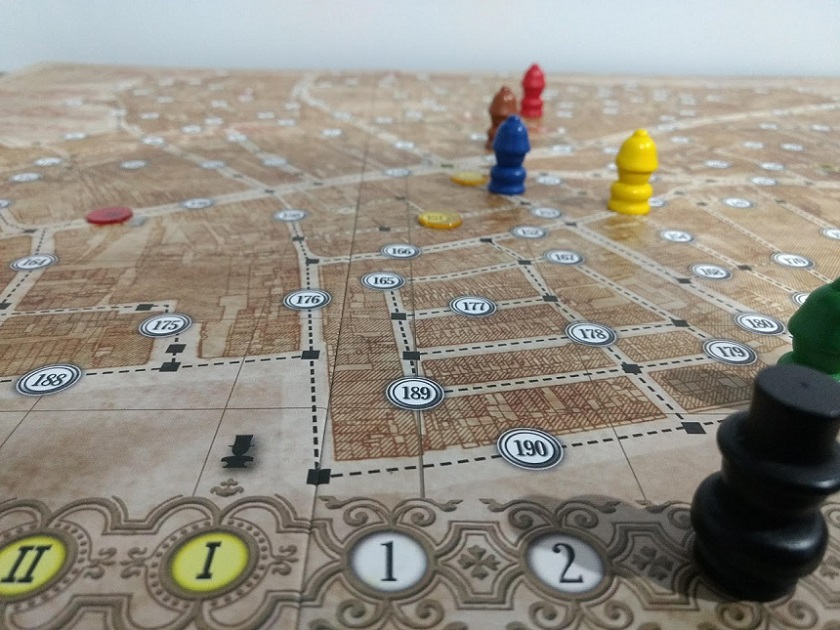
Letters from Whitechapel Review – A Flawless Game of Cat and Mouse That Lasts a Night Too Long
Hunting Jack the Ripper through London’s alleyways creates unmatched table paranoia. A flawless game of cat and mouse that lasts just a bit too long.
A score tells you if it’s good, but the leaderboard tells you if it’s worth the shelf space.

 Loading ...

“players look at their own tokens, and then look at the token owned by the player to their right. If you’ve ever used a public urinal you’re probably already familiar with this mechanic”
Excellent.