
Nobody gets it right the first time. From misprints and spelling mistakes to rules goofs and even cultural insensitivities, there’s a lot that board game creators can – and do – get wrong.
But what happens when those mistakes come to light?
Enter errata.
It’s a strange word, but it comes from the Latin meaning “a list of errors and corrections” inserted into a book – or in this case, a game – after publication. In board games, errata might still take the form of a paper slip, but it’s more commonly seen in reprinted cards, updated editions, or even FAQs on BoardGameGeek.
There’s no one-size-fits-all approach to handling these errors, and each publisher does things differently. Here are a few of my personal experiences with errata and how publishers have managed them.
When Publishers Leave You Hanging
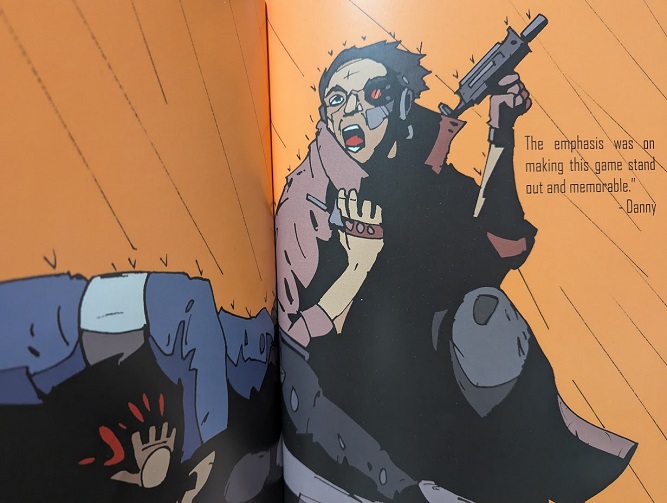
The Agents was a slick card game where you’d place agent cards on a three-way battlefield. Their activation depended on adjacent cards, making every placement a strategic decision. But beyond the gameplay, it was the artwork that truly stood out. At the time, it was one of the few games that invested in a unique visual style, and it absolutely blew people away – including me.
In its original Kickstarter run, the publisher opted for plastic cards – a novel idea, but not the most practical. When I received them, I quickly discovered that shuffling the cards was both a dream and a nightmare. Sure, when shuffling they slid into place perfectly, but they also had a habit of flying out of your hands at the slightest touch.
Yet, that wasn’t even the real issue.
The cards had been cut in a way that left rough plastic nodules along the top and bottom edges, turning each card into a miniature spiked menace. It was incredibly frustrating – here was a game with stunning art and intriguing mechanics, yet the physical cards were so off-putting that they were almost unplayable.
I remember myself and other backers scrambling to find DIY solutions to smooth out the edges, with some even resorting to filing them down.
While I never got around to fixing mine, replacing every backer’s copy was financially impossible for the indie publisher. So, they left us hanging with our spiky cards. However, to their credit, they launched a second Kickstarter and finally got it right… this time without any sharp surprises.
Shared Costs
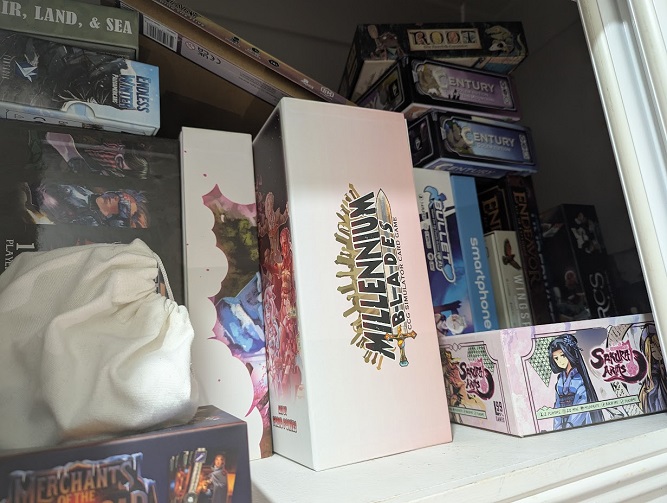
Another example of a board game publisher addressing their mistakes is Leder Games and the way they handled Root – a game of furry forest critters battling for supremacy.
Within months of its original release, players quickly discovered that the factions were imbalanced. A surprisingly common occurrence in both games and software, as no matter how rigorous your in-house quality assurance is, it’s impossible to match the sheer scale of thousands – or even hundreds of thousands – of people interacting with your product.
Trust me, I’ve worked in software development and let through my fair share of bugs. If you’re thinking, Why didn’t they just test more and find all the issues? the answer is best summed up by this classic QA joke:
A quality assurance engineer walks into a bar:
They order a beer.
They order three beers.
They order fjkkkkkkllllll.
They order -1 beer.A customer walks into the bar, orders a wine, and the bar explodes.
When you’re in QA, your job is to hunt for edge cases and actively try to break the system – it’s a destructive approach by design. Players, however, interact with the game in a constructive way. They’re focused on experimenting, strategising, and winning, something testers don’t struggle to look for.
Anyway, I’ve digressed enough.
The point is: when Root first launched, there were glaring balance issues, especially noticeable in competitive tournament settings. These imbalances also trickled down to more casual games at your kitchen table.
To address this, Leder Games offered an upgrade pack as part of their next Kickstarter, The Underworld Expansion. For just five dollars (plus shipping if you only wanted the pack), players could get updated faction components that rebalanced the game – without needing to buy an entirely new copy.
This approach was a clever shared cost compromise: it avoided forcing customers to purchase a brand-new game while also ensuring that the fix was accessible and affordable.
Above and Beyond
When it comes to errata, the biggest surprise for me was Fireball Island. The main attraction? A massive, slanted plastic island where you roll marbles down ramps to knock over other players’ figures. It’s a spectacle of chaos and nostalgia, but the sheer size and complexity of the game presented enormous manufacturing and shipping challenges.
How do you produce and distribute something that big to players all over the world?
For the most part, Restoration Games nailed the initial production. But my copy of the game had one devastating problem: the marbles wouldn’t roll down the island. Imagine owning Fireball Island and the marbles – the literal heart of the game – just sat there. It was a dealbreaker.
After delivering the game to backers, the company sent out a form asking if anyone had encountered issues. I filled it out, explaining my marble woes, but honestly didn’t expect much.
Let’s be real – this was a hefty, custom-molded plastic island. Building a replacement would take serious effort, and shipping it all the way to Australia? That sounded insanely expensive.
And yet, months later, a package arrived on my doorstep. To my shock, inside was a completely new island for Fireball Island. No charge. No hassle. Just a brand-new board to bring the game to life.
Honestly, I was blown away by their service, they went above and beyond. So if I ever meet anyone from Restoration Games, drinks are on me.
Mistakes, goofs and errata are an inevitable part of any creative work, but how it’s handled can make or break trust between publishers and players.
So, what do you think – who should pay for the fixes when things go wrong? Cast your vote and share your thoughts below!
 Loading ...

To me errata is literally that “list of errors & corrections” which should be available free in a printed or digital format. (More relevant to a book, or the actual rules for a board game.)
I wouldn’t use errata as a term with games where physical components have a fault, or the game balance is out, etc.
In some cases, I believe a replacement at no cost is fair. If I order a chair where one leg is much shorter than the other three legs, I have a right to replacement or refund.
In a lot of other cases (like the Root example you mention) a low cost option to upgrade in some way is great. This helps both publisher and purchaser by sharing cost and I think most people would be happy to spend a bit more to fix or improve a game they invested in.
I feel that although that’s where errata started, there have been so many second editions with errata included that the line between what is and isn’t errata (by the strictest definition) has been blurred.
I like you’re analogy but I wonder where you’d draw the line? For a chair it’s easy, it has a purpose – it doesn’t fulfill that purpose get a replacement/refund. But do you consider a board game’s purpose to provide you with fun? If so how do you differentiate between a bad board game and a broken board game?