Dinosaur Island
Players: 1-4
Playing Time: 90-120 minutes
Designers: Jonathan Gilmour, Brian Lewis
Publisher: Pandasaurus Games
Dinosaur Island loses points for not capitalizing on a great theme. But more offensive than that, the game is boring. Too many disconnected mechanics that don’t feel good to use or interesting to engage with.
Pros
- Awesome theme of creating your own dinosaur park
- Production and components are so good, it changed the industry
- Artwork from Kwanchai Moriya pops, making the game look great on your shelf
- Plenty of different objectives to keep the game feeling different every play
- The DNA track was well done and fun to play around with
Cons
- Dinosaurs have no material impact on the game outside of their threat level
- Too many phases and rules for each phase, without appropriate rewards
- Unnecessary complex, making a lot of the game feel unimpactful
Love our reviews? Buying through our links earns us a small commission at zero extra cost to you, helping us table the next big release! Full disclosure here.
Dinosaur Island exploded on Kickstarter. It was one of the first games to truly offer a premium experience. Metal coins, plastic dinosaurs, dual-layered cardboard player mats, and a slap band! Before this game, we were ecstatic when Agricola included wooden sheep.
Once you finish ogling the components, you’ll find a lot is going on in Dinosaur Island. Each round takes place over four phases and a clean-up.
Beginning with the Research Phase, where you roll two handfuls of chunky dice, and draft the outcomes. The drafting is done with your three scientists, who are levelled from one to three. You place a scientist next to a die and multiply the rewards by the scientist’s level. Through this draft, you can get DNA, collect dinosaur recipes, or upgrade your DNA storage.
While in the Market Phase, you turn your money into improvements for your park. Building attractions, upgrading your laboratory, hiring specialists, and if worse comes worst you can buy additional DNA.
Next is the Worker Phase. Here you put your staff to work by placing them in different action spaces on your player board. Actions include mixing DNA, creating new dinosaurs, and increasing the security of the park.
Now all the behind-the-scenes work is done, visitors can now tour your park. It’s here, all of it comes together in the Park Phase.
Visitors line up to enter your park based on how much excitement you’ve generated through dinosaurs and attractions. These all count as victory points, but only if you have the capacity for them in your attractions. Oh, and they don’t get eaten.
In the event your dinosaurs create more threats than you have security systems, they take over the park. Gobbling up visitors and your victory points along with them.
Once this Park Concludes, then it’s onto cleanup and the round. You continue through these many, many phases until all but one of the randomly drawn objectives are complete.

Where’s the excitement?
Dinosaur Island fails the impossible task of being as exciting as what it’s themed after. The fact we have six Jurassic Park movies, while only two of them are sitting above 54% on Rotten Tomatoes, speaks volumes about the popularity and excitement of dinosaurs.
Yet in Dinosaur Island, these magnificent creatures are relegated to being just bigger attractions. By that I mean, they have no personality or anything that makes one stand out from the other. Compare this treatment to animals in Ark Nova, where each animal has a special ability and feels unique, and it’s nothing short of disappointing.
When you hear a game called Dinosaur Island, your brain fills with exciting possibilities of what it could be. But here, it’s a rather ordinary eurogame. Where the theme could be replaced with any number of different park management scenarios, without the designers missing a beat.
Outside of the theme though, the game is overwrought with unnecessary complexity. The five phases of each round don’t add up to a cohesive whole.
Each phase introduces a new mechanic. Whether it’s drafting, resource management, or worker placement, you’re always doing something new. Therefore, it’s hard to connect what you’re doing in one phase to the next. Meaning, that you’re more focused on working within the boundaries of each phase than putting together an interesting strategy.
This makes Dinosaur Island an incredibly wide and varied board game. But a shallow one.
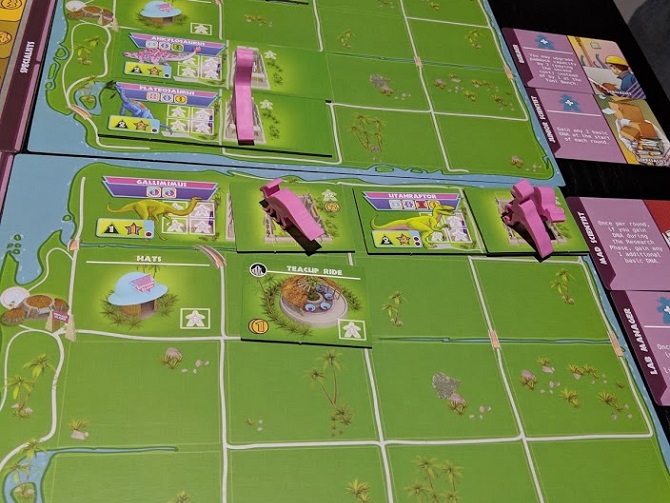
A game of inches
There are a couple of bright lights within Dinosaur Island. For example, the DNA system is fun to interact with. There are three types of basic DNA and three types of advanced DNA. You have to mix, match, and combine to create the specific DNA types for dinosaur recipes.
Compared to the rest of the game, this DNA management is tight and streamlined. Making the puzzle to figure out the best way to use your DNA is an interesting challenge.
There are also the end-game objectives, that keep the game fresh after a couple of plays. Coming in three different flavours, short, medium, and long they allow you to customize how you want to play. Although, in short games, you barely have time to finish your first dinosaur.
But that’s all there is.
Outside of these highlights, Dinosaur Island feels like a game of chores. Where the pace is slow, and the work you put in isn’t rewarded well enough to keep you engaged. Like when you manage to put together some coin to hire specialists, and their benefits give one extra visitor or increase your security by one per round. It’s not worth the trouble.
The reverse of this is also true. For example, when T-Rex breaks loose running among your visitors. Your park isn’t shut down, heck, you don’t even make the news. You only lose a few points, and still attract visitors in the next round.
It feels like no matter what you do your park is never affected too badly by how it’s run. This keeps scores close throughout the game but doesn’t feel as exciting or interactive as something like Argent the Consortium.
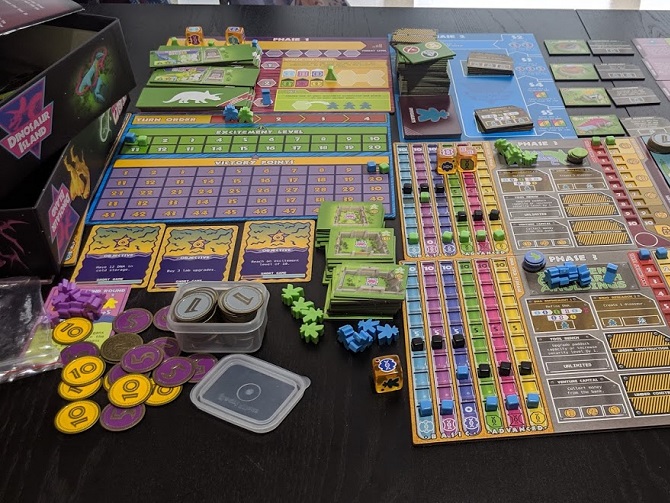
Beautiful but flawed
In terms of publishing, Pandasaurus set a new benchmark with Dinosaur Island. With artwork from Kwanchai Moriya, it’s still one of the best-looking, and best-produced board games on the market.
However, I’m hung up on how much the theme mismatches the mechanics of the game. A theme that evokes excitement just by looking at the box, and using your imagination. It never stood a chance of meeting those expectations, but it misses the mark so badly that it sucks my excitement to play right out of the air like some sort of vampire.
But even when you put the theme aside. Dinosaur Island is a remix of mechanics we’ve seen in other board games before. Except, it doesn’t improve on any of these mechanics it’s borrowing.
Quite the opposite.
A large number of phases and rules add complexity for complexity’s sake. This increases game time, and slows the pace of the game, while not adding any scope for strategy. Compared to Endless Winter: Paleoamericans which follows a similar design philosophy, but nails it. It’s hard to recommend Dinosaur Island when there are other games out there doing the same thing – but better.
Similar Games You Might Like

Dune: Imperium Review – Robbing Peter to Pay Paul Atreides
Throws agonizing, high-stakes decisions at you from the very first turn. A razor-sharp clash of worker placement, deck-building, and volatile combat.

Capital Lux Review – A Game That Waits in a Back Alley to Steal Your Wallet
Stack points in your town, but go higher than the central Capital and you lose it all. A small-box masterclass in greed, bluffing, and teeth-gritting, edge-of-your-seat tension.
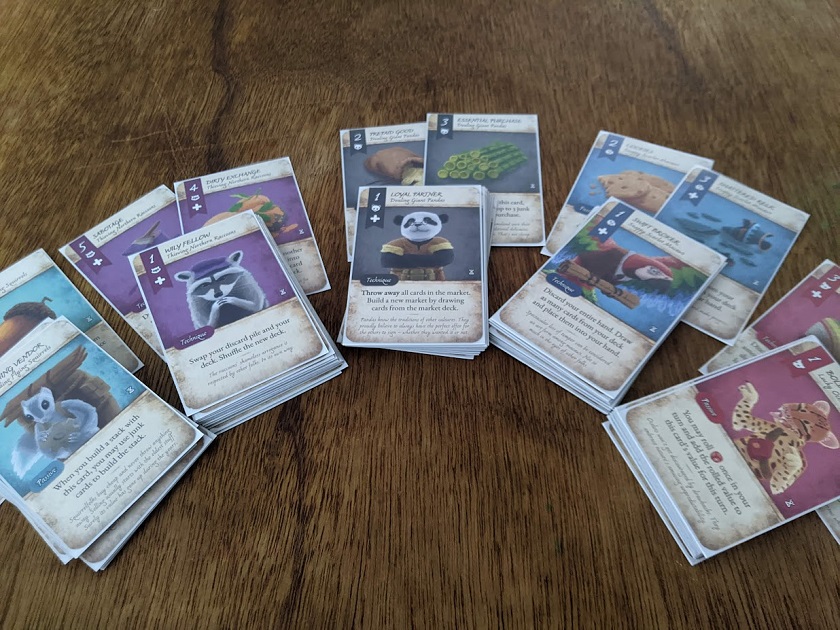
Dale of Merchants Review – Call Me Anakin Skywalker Because THIS is Deck-Building
Burn your best abilities to build market stalls in a race where deck efficiency takes a backseat. Fast, thematic deck-building with a fantastic sense of urgency.
A score tells you if it’s good, but the leaderboard tells you if it’s worth the shelf space.

 Loading ...