Catacombs Conquest
Players: 2-4
Playing Time: 15-30 minutes
Designer: Aron West
Publisher: Elzra
Catacombs Conquest is filled with all the highs and lows to be found in a flicking board game. With its wonderful artwork and slightly strategic gameplay, it’s another decent dexterity game.
Pros
- The artwork and characters are fun and fit perfectly into the Catacombs world
- Light strategy in playing cards that grant abilities and powers
- Finger-flicking fun, with all the trick shots you can manage
- Great spectacle board game, it’s enjoyable watching others flick
Cons
- Can be overly long if you play too many shields
- Components did not hold up well, with the plastic wall holders ripping the walls or breaking
Love our reviews? Buying through our links earns us a small commission at zero extra cost to you, helping us table the next big release! Full disclosure here.
Catacombs Conquest attempts to translate the design of the excellent dexterity game Catacombs into a smaller, leaner team vs team board game. Keeping the same fun card play, unique stylistic art, and of course, the finger-flicking fun.
The original Catacombs is a dexterity-based dungeon crawler. Where heroes and monsters are sliding disks, and a team of players would work their way through different maps, collecting items and experience. Until they reached a boss fight.
There’s a lot of work in setting up and running a game of Catacombs. Making it an event game, rather than a board game you can pull out and play whenever you feel like it.
So if Catacombs was the marble starting position, then Catacombs Conquest is the chiselled sculpture underneath. Catacombs Conquest sheds all of the RPG elements and the epic boss battles from the original while retaining the interesting card play and disc-shooting fun.
Then turns the one versus many dungeon crawler into a tactical team vs team battle to the death.
Each turn you’ll select a card from a hand of hero (or monster) cards and carry out their special ability. This ranges from extra damage to a sequence of flicks you need to make in order. Eventually, a team will reach zero health making the other team the victor.
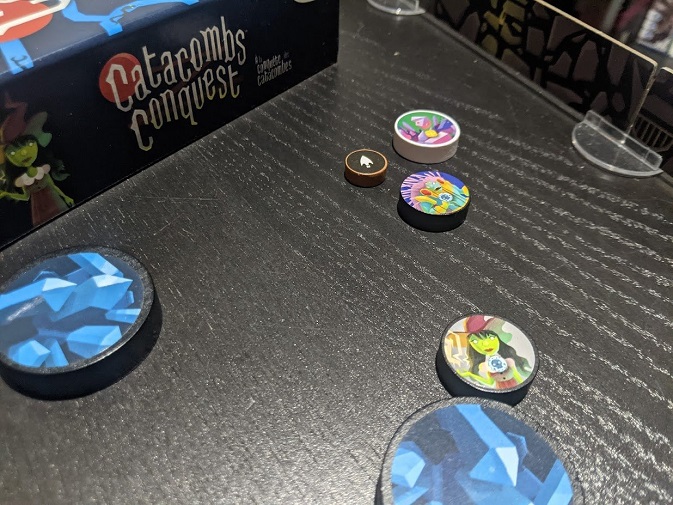
Take your shot
Catacombs Conquest takes notes from the childhood game of flicking coins on school tables but supercharges it with creativity.
The cards you play each turn give you a combination of flicks to make from eight different shot types. Where some shots will move your character token, while others are primarily projectiles. Either way, they all change the process of flicking enough to get you thinking about which shot is needed for your turn.
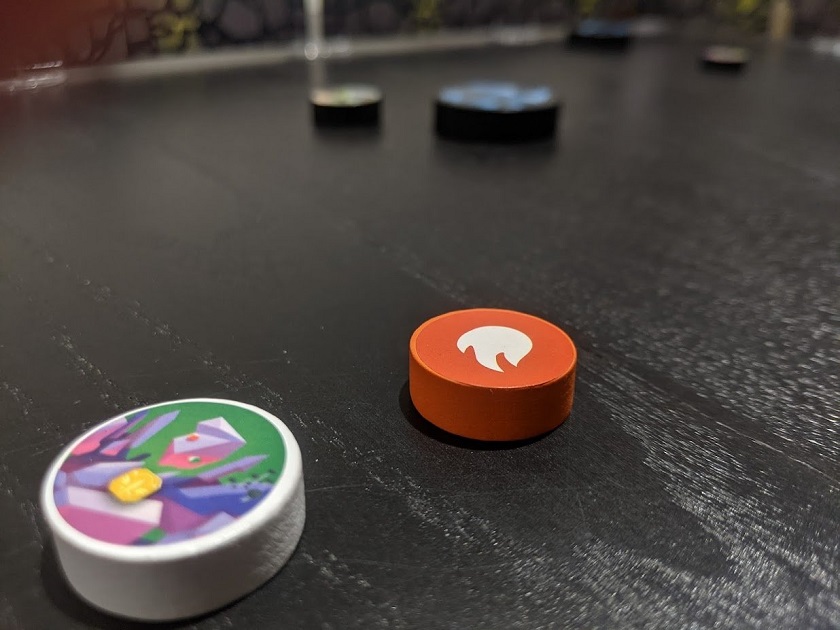
For example, Solastam the vampire guard allows you to fire an arrow, a smaller wooden token about the size of a pill. Then you can do a melee attack, flicking your character towards the opponents in the board game equivalent of a Falcon Punch.
Between this flick sequencing and shot types, you’re given a lot of agency and skill expression over how you play. Whether you play calculated and take time to set up your shots, or play high-risk and go for the difficult flicks Catacomb Conquest allows you to play both.
What often happens, is you start at one extreme of playing calm and collected until the health of both teams whittles down. Then the difference between winning and losing becomes that one hero play.
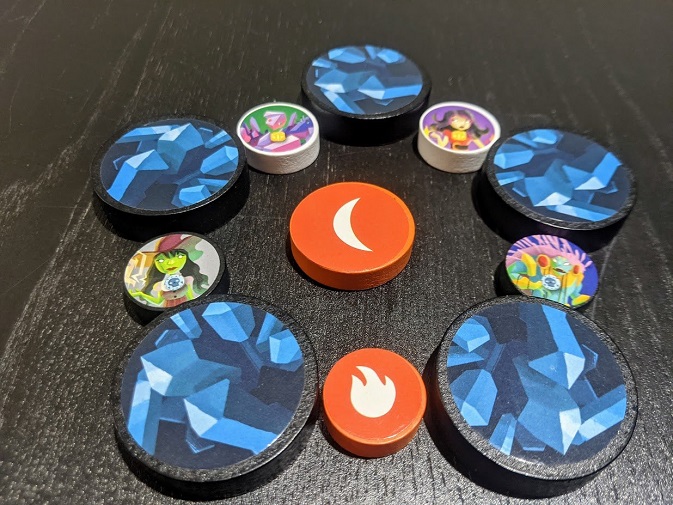
Does it improve the formula?
Dexterity games are almost always a good time; Catacombs Conquest is no different.
I believe there’s something in our monkey brains that enjoys tactility. Whether you’re balancing an object in Go Cuckoo, tossing a playing card in Vampires vs Unicorns, or flicking a wooden token, it’s all enjoyable to the ape inside.
They’re always the spectacle as well.
It’s fun to watch your friends as they agonize over their flicks, trying to predict the perfect angle. Then watching them curse their fat fingers as the token scoots awry. Likewise, it’s equally entertaining watching them succeed at that all-but-impossible flick. Because either way, everyone – at some point in their lives – has flicked something, and knows how difficult it is.
But this sentiment doesn’t apply strictly to Catacombs Conquest, and instead applies to the genre. What we need to discuss is how the designers added to these elements to make a better game.
In the case of Catacombs Conquest, it’s the health and cards.
The cards will engage you in thinking about your strategy. Maybe not as much as your average board game. But then it’s the icing on a finger-flicking-flavoured cake. So it doesn’t need to be incredibly deep, it just needs to be deep enough for you to discuss tactics with your teammate.
Which you’ll be doing a lot of in Catacombs Conquest.
On the other hand, allowing abilities to both give health and damage means that both teams’ health pools will grow and shrink throughout the game. Providing a narrative for the battle of good and evil, and stakes for each shot you take. A shot when you have one health remaining is a lot more nerve-wracking than a shot when you’re team’s health is full.
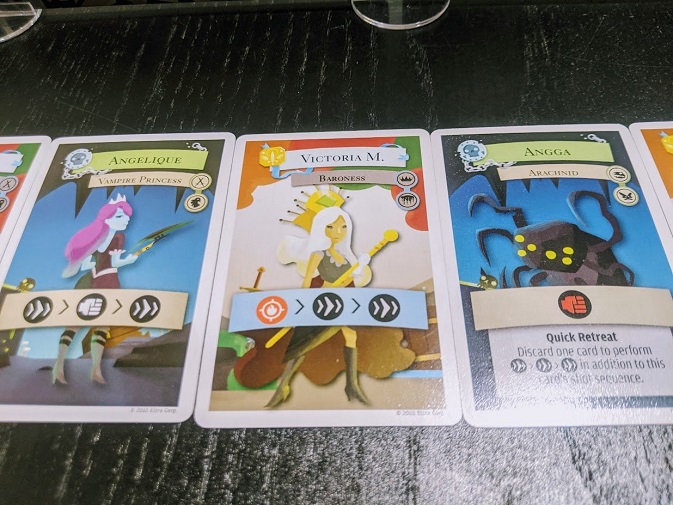
Time for some dungeoneering?
For the most part, the components within Catacombs Conquest do their job well. The art continues to be playful and the style is fun to look at. It matches the theme of the game, as well as the gameplay.
However, if I have one gripe it would be with the plastic wall holders. Now, this may be because of the Australian humidity, but these holders gripped the cardboard walls tighter than a helicopter parent sending their kid on to camp. Often I would have to cause damage to the cardboard trying to put them together.
From a gameplay point of view though, Catacombs Conquest is up there with ICECOOL, but in a much smaller – and more portable – package. While yes, beer and pretzels will make a great accessory, there’s enough in here to have a fun time playing semi-seriously, considering your shots and watching the mayhem unfold.
Similar Games You Might Like

Flick ’em Up! Dead of Winter Review – A Chibi Apocalypse That’s Too Much Work
This undead mashup dead-ends fast. A cute, flicking dexterity game that ditches the paranoia of the original Dead of Winter for an avalanche of annoying setup.

Click Clack Lumberjack Review – A Game Where It’s Faster to Plant a Real Tree and Wait for It to Grow
All bark and no bite. Hitting the tree is fun, but setting up and finding a winner is where this tree falls over.

Vampires vs Unicorns Review – A Frat Game Minus the Beer
Fling cards across the room to land them on rival’s cardboard castle. A flat party gimmick that devolves into an aching lower back.
A score tells you if it’s good, but the leaderboard tells you if it’s worth the shelf space.

 Loading ...