Disclaimer: Tellstones: Kings Gambit was provided for free by Riot Games, although the writing and opinions of this article are my own.
Tellstones: King’s Gambit
Players: 2
Playing Time: 10-20 minutes
Designer: Chris Cantrell
Publisher: Riot Games
Tellstones: King’s Gambit requires more from you than most other board games. As a result, most gamers are going to dismiss this game as mining the dirt, while the gold sits just beneath.
Pros
- Incredible production value, with the chunky tokens and cloth map
- Bluffing your opponent can be a lot of fun
- Different strategies and ways to throw off your opponent
Cons
- Involves memory which is hit or miss with some players
- Requires several games before you unlock the interesting part of the game
- Spending a lot of mental energy trying to remember symbols
Riot Games is back! Although they never went anywhere it’s been a hot minute since they surprised the board gaming world with their excellent first foray: Mechs vs Minions.
Given how awesome it was, there was a lot of excitement surrounding the release of Tellstones: Kings Gambit. But upon reading the rules, and seeing the game box, it’s immediately obvious this is not of the same ilk. Where Mechs vs Minions was a campaign game of epic proportions, with wild powers, painted miniatures and voice acting for every scenario, Tellstones: King’s Gambit is a lot more subdued.
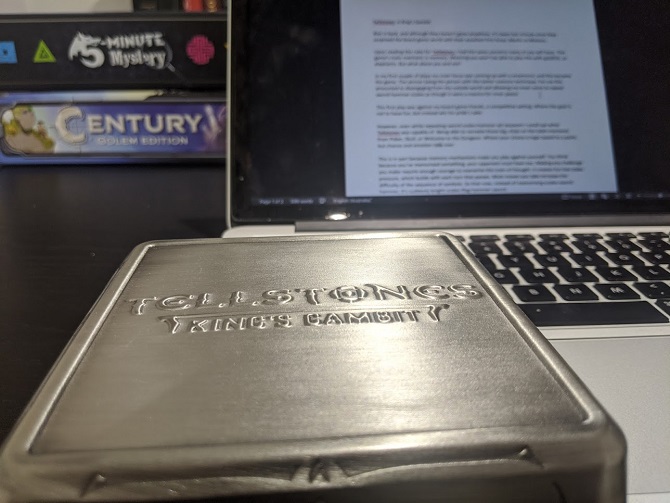
It arrives in a small metallic box and only has several components. Beautiful as they may be, Tellstones: King’s Gambit resembles Hive, Chess, or those more traditional games you’d find in times of yore, rather than a modern-day board game.
This makes sense when you realise that Tellstones: King’s Gambit is not made to be a modern board game. Instead, it’s meant to be the game that characters from League of Legends play in their great stone halls. This is in a time of feudalism, and castles, where hex-tech technology has yet to be widely popularized.
With that, Tellstones: King’s Gambit is a game of memory and bluffing. Therefore, you won’t be able to play with goldfish or elephants.
But what about you and me?
You play your opponents, more than the game
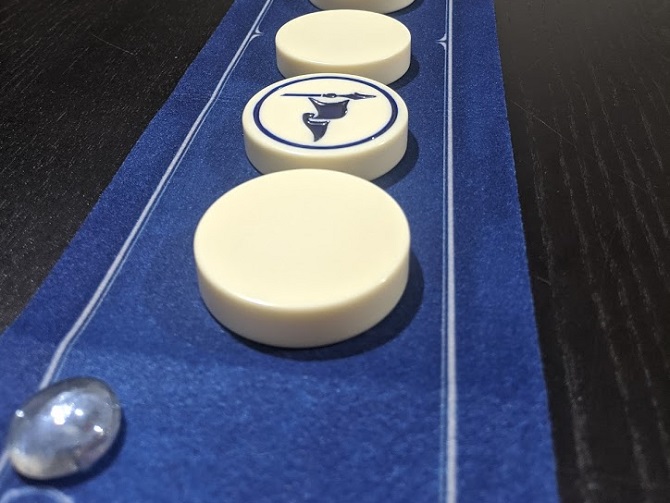
During a game of Tellstones: King’s Gambit, you’ll be placing stones along a central line. These stones start faceup, but players can turn them over, or rearrange them as part of their turns.
Eventually, when the line becomes tricky to track, you can then challenge the other to correctly guess certain facedown stones. Where if they get it right, they get a point, and if not, the point is yours. Three points and you win the game.
Further to this, there’s also the option to boast that you can name every stone in the line. Guessing them all correctly at that point also wins you the game.
When I first started playing Tellstones: King’s Gambit, my focus was coming up with a mnemonic to store the order of the tokens. The winner of these early games was the person with the better memory technique. For me, this amounted to repeating sword-hammer-scales as though it were a mantra for inner peace.
However, even while repeating sword-scales-hammer ad nauseam I could see what Tellstones: King’s Gambit was capable of recreating those big, chips-on-the-table moments from Poker, or Welcome to the Dungeon.
Because of the memory aspect, you’re playing against yourself. Once you think you’ve memorised something, you convince yourself your opponent has it memorised too. Any challenge, or boast you make, requires courage to overwrite your beliefs. Creating fun low-stakes pressure that builds with each turn that passes.
After you settle on a mnemonic, you can start to focus on other aspects of the game. Like figuring out when to swap, and when to add new stones. Or when to challenge, and when to boast. Reaching this point, was a challenge, but doing so opened the game up to a surprising amount of thought.
A step backwards
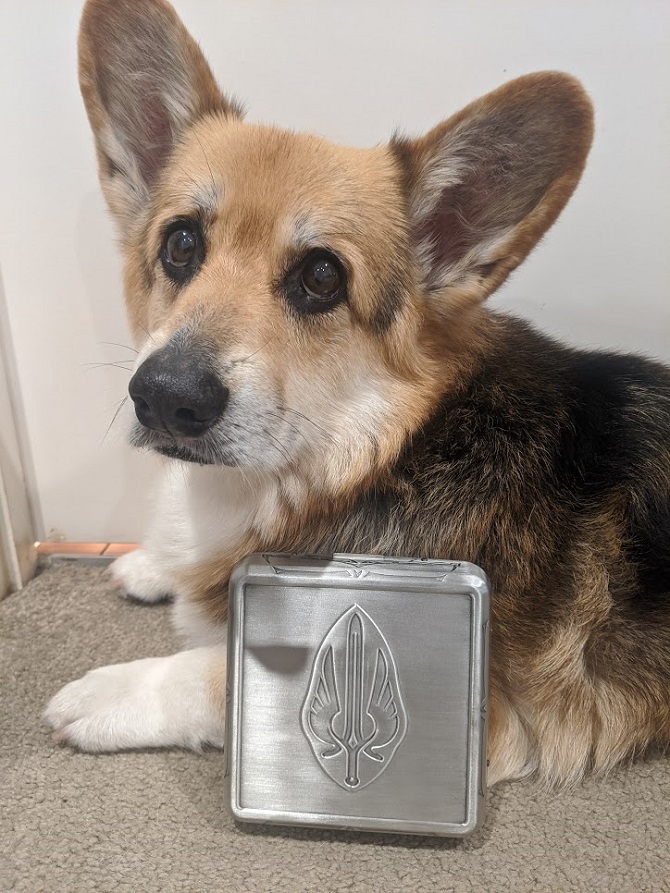
Tellstones: King’s Gambit lives up to the component standard Riot created with Mechs vs Minions. They’ve set out to make sure this game stays in your collection for at least a generation, if not more. Making it the perfect gift as a collectible for people who play League of Legends, even if they don’t enjoy board games.
Overall, Tellstones: King’s Gambit doesn’t reach the same height as some of my favourite two-player games like Hanamikoji, or Fugitive. Even still it fills a niche I’ve yet to see, which is that stone-cold bluffing you’d find in Poker or Welcome to the Dungeon but for two players.
However, for it to come even close to those games, you need to put in the work to get comfortable with the memory aspect of the game. But once you do, Tellstones: King’s Gambit is a decent competitive board game with zero rules overhead, a short playtime, and is more portable than bringing your PC over for a League of Legends LAN.
Similar Games You Might Like

Welcome Back to the Dungeon Review – New Heroes, More Chaos, Same Bravado
Fresh gear and tricky monsters make stripping down the hero an even tougher decision. A clever standalone expansion that adds more strategy to the original’s simple game of chicken.

Celestia Review – Trusting Your Friends’ Fake Smiles Until the Ship Explodes
Trusting your pilot yields massive rewards, but taking their fake smiles at face value sends everyone crashing. A joyful, high-flying bluffing game.
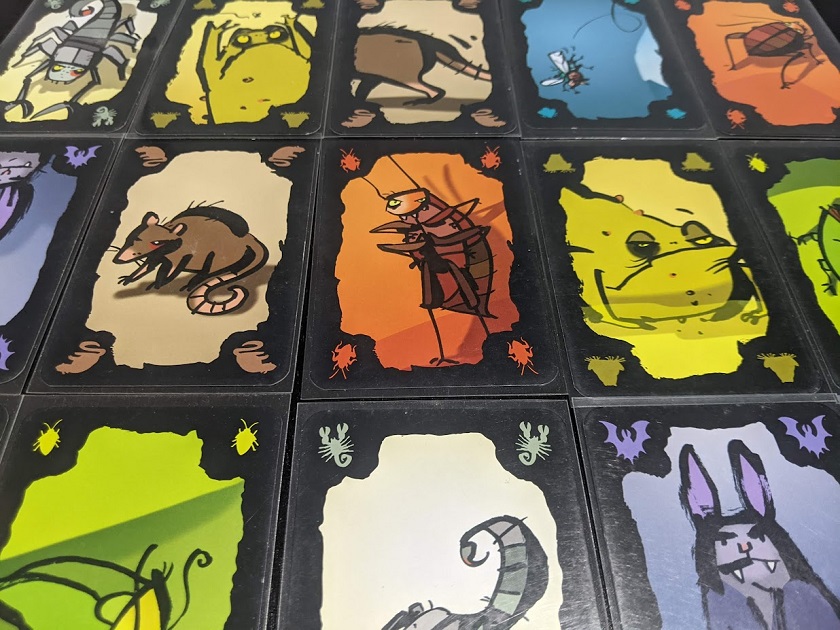
Cockroach Poker Royal Review – Sweating Bullets Over a Stink Bug Wearing a Tiny Yellow Crown
Palm off crowned critters onto gullible friends while keeping a straight face. A hilarious game of bluffing elevated by sharp higher-stake royal critter cards.
A score tells you if it’s good, but the leaderboard tells you if it’s worth the shelf space.


 Loading ...