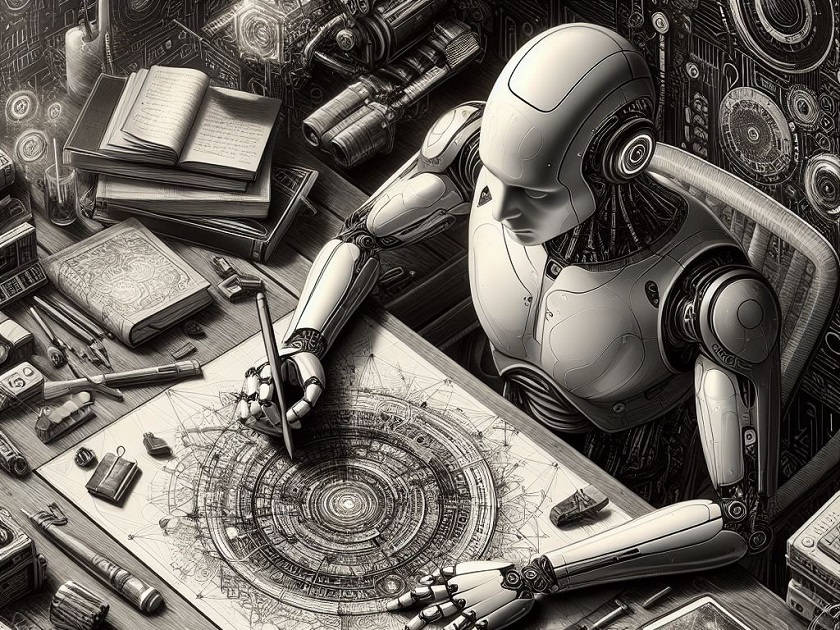
Last year, FryxGames found themselves in the crosshairs of the board game community when they announced that they were using AI artwork for their new game, Terraforming Mars: The Dice Game.
While they weren’t the first board game publisher to use AI artwork, FryxGames was certainly the biggest. This caused all sorts of outrage, including this awfully point-blank Polygon interview. The interviewer didn’t back down as Travis Worthington tried to duck, dive, and roll out of the way of answering questions about how the AI artwork was used. Ultimately leading to this 750+ comment thread on Reddit and even more outrage on Board Game Geek.
Now that the dust has settled, we can look at what happened and the future of AI artwork in board games. It’s easy to use a broad brush and declare all AI artwork as evil, but I think the conversation is more nuanced than that, which is what we’ll dive into here.
By the numbers
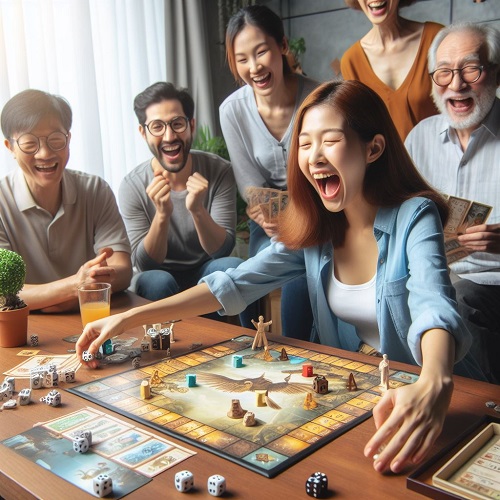
Using the Terraforming Mars: The Dice Game as an example, we can see the impact of using AI artwork on the bottom line. Terraforming Mars is a successful board gaming brand, with FryxGames managing to leverage their hit into a series with the smaller game, Terraforming Mars: Ares Expedition.
This was also an excellent board game and showed that FryxGames was a publisher to keep your eyes on. Backing this up are the numbers generated from the Ares Expedition Kickstarter, which raised USD 1,232,899 and had 16,903 backers.
The next stand-alone game from FryxGames was Terraforming Mars: The Dice Game Kickstarter which was also the first time they announced using AI artwork. This Kickstarter only raised $444,642 with 10,366 backers. A statistically significant drop.
Even though there is a massive 780 thousand dollar difference between the two campaigns, that can be explained away by how the games were packaged. Ares Expedition also offered the original game, as well as some pre-packaged expansions. Whereas The Dice Game just offered the game itself.
What can’t be explained away is the massive drop off in backers with 6,537 or 39% of backers not returning. This would indicate a negative return on using AI artwork in assets, except the story doesn’t stop there.
FryxGames returned to Kickstarter in 2024 with a new expansion for Terraforming Mars, Prelude 2. This new project also used AI to generate art assets, and yet still raised $2,222,703 with 19,062 backers all pledging their support.
This seems like a bounce-back, but it’s also for a mainline expansion. Terraforming Mars: Turmoil was the last mainline expansion and it raised $1,367,901 and had 26,004 backers. The difference between backer counts is again significant, with 6,942 or 27% of backers gone missing.
How much of this is because Terraforming Mars oversaturated the market, or people felt like they didn’t need the extra content, we might never know. However, one big difference between the first and second campaigns in both of these examples is one uses AI artwork and the other doesn’t, and both times we see a 6-7000 backer reduction.
Why do you buy the board games?
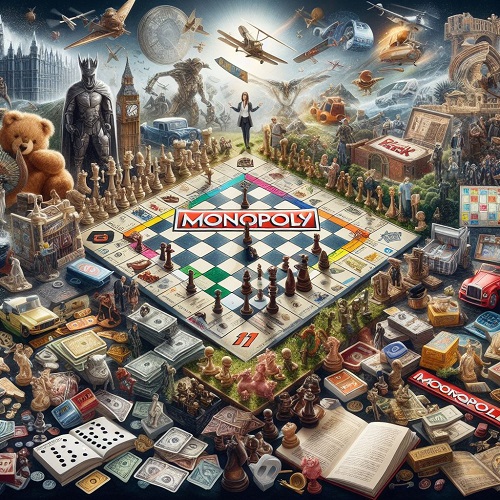
When thinking about the takeover of AI artwork, it raises the question of why you buy a board game. Do you buy it for the artwork, or the game design? Are these things separable?
In the build phase assuredly. Excluding the unicorns such as Ryan Laukat and Sami Laakso who both design and produce art for their games. One person usually takes the role of game designer, while another takes the role of artist.
But as a consumer of the product, do we consider them separate? Have you ever bought a board game for the art alone? I’d be lying to say I haven’t. But it’s more like the art gets me to notice the game, while the game design keeps it on my shelf.
This is the argument you see from game designers and publishers pushing for AI artwork. They believe people are more interested in the design of the game and don’t care so much about the art. Therefore, they just need to make the game look good enough to sell as opposed to making the next masterpiece.
In my experience, the best games are the ones where art informs the design as much as the design informs the art. Both need to combine to create the magical final product. By removing the artist and only using the game designer’s input, we will be seeing games that are closer to the original vision for the game. This may result in better games, but then again, I’ve seen a lot of Director’s Cuts that straight-up sucked.

The benefits of AI artwork
No longer talking about FryxGames, let’s consider the following two real-world use cases for AI artwork.
John and Jane Smith are designing their first board game. Their journey begins with making a prototype of thumbtacks and cutouts. Testing it amongst their friends, getting feedback, reworking it, and testing it again. Repeating this process ad nauseam as they introduce new players and gain more feedback.
This cycle might go on for months if not years. Yet, at this point in the process, the only thing they’ve spent is time and effort. Not a dollar has left their wallets. Now, however, they want to take it to market. There’s only the small matter of artwork.
When it comes to money, each artist has their own rates. But Jasper Birch from Pine Island Games gave us some indication of what to expect when they wrote a guest article on Stonemaier Games’ blog:
Fully rendered, high-detail illustration for a card could run between $250 to North of $1,000. A box cover could be in the $2,000-$6,000 range.
Once all of the artwork is completed, you could be looking at between 10 – 50,000 dollars. For John and Jane, that’s a big investment for something that might not sell. But what if they could spend a couple of hundred dollars to get credits for an AI artwork generator?
As a consumer, there’s an upside here for us as well. With less money going into production, we should expect to see cheaper games.
Next example.
Terry and Tina have designed a game, gathered funds for the artwork and hired an artist. However, they have a dilemma, they haven’t settled on a theme for a game. They currently have two great ideas where the mechanics fit the theme perfectly but aren’t sure which way to go.
At the moment, they’d have to gamble on one of these versions. With AI artwork, they could easily and quickly produce two sets of cards and test them out before committing to a theme with an actual artist.
This kind of rapid prototyping is currently not available with the way commissioning artists work within the board game world. John Omega Williams talks about expected turnaround times from artists on Board Game Geek:
My base guideline is 5 days to a week per piece of line art, a week if shaded or complex. 1 week per colour piece and upwards of one month per painting level piece.
Given artwork is such a key component of a board game experience, it’s important to get it right. Here’s a real-life example of AI artwork being used for this type of development by Reddit user ZealousidealShow3069. They are using AI artwork while their game is still a prototype.

The downsides of AI artwork
We’ve already covered the stigma of AI artwork and the impact it can have on the bottom line. However, there’s even more to consider.
For instance, the big moral question surrounding AI artwork is whether it is considered theft. We won’t go into details here, but a lot of the mainstream AI platforms are trained on copywritten artwork. However, the artists whose work is being used aren’t being paid a cent.
So far there hasn’t been a successful lawsuit against these platforms, but due to the nature of how these AI artwork platforms work. It’s only a matter of time before one of these lawsuits sticks.
While we’re talking legalities, a judge recently ruled that you can’t copywrite AI artwork. This is usually the only part of board games that are copywritten because of the ruling in Baker vs Seldon:
…the systems or processes that make up the core of a game—generally referred to as the “game mechanics”—are not subject to copyright, even though the written rules, game board, card artwork, and other elements—often referred to as the “theme” of the game—may be.
With this in mind, if you use AI artwork it’s going to be hard, if not impossible, to protect your game from counterfeits. A threat that Polygon has reported as being on the rise.
Moving away from the land of legality for a second, there’s also the question of ethics. Wherein using AI artwork, you’re effectively removing a job from the market. We’re not talking about dull and menial labour either, which ideally is what AI should be removing from our lives.
The long-term consequences of this AI artwork takeover are yet unseen. However, it’s easy to imagine a future where there are fewer professional artists, and as a result less training material for AI artwork. Ending in a dystopian future where an ouroboros effect comes into play as AI artwork becomes the training material of other AI.

AI artwork kind of sucks
I’ve talked all around the subject of AI artwork, but let’s talk about the artwork itself. It kind of sucks. As you have seen throughout this article, I’ve been using AI artwork so that you can get a flavour of the current standard. Some of it looks good, some of it awful, and some just looks weird.
At the moment, I can’t imagine AI artwork improving the look of a board game above using a traditional artist. However, that may change over time. What won’t change is the consistency and the emotional evocation a good artist can bring to a board game. This is something I don’t think AI artwork will be able to replicate for a long time – if ever.
I talked about this briefly in my review of Apiary, about how designers bring their past experiences into their creative process, ultimately forming the final design. The same is true of artists, each has their own style and flavour that they bring to the games they work on.
A great example is Root and Oath, games that are as much Kyle Ferrin’s as Cole Wehrle’s. But it’s Kyle’s art that makes these games feel so alive, and approachable. Without his touch, you would expect them both to be a lot drier as we see in Cole’s independent projects of Pax Pamir and John Company.
It’s only through the combination of artist, designer, and everyone else involved in publishing a board game that we see the best results. That’s why, despite significant upsides to AI artwork, I hope publishers aren’t in a rush to follow FryxGames.
What are your thoughts on AI artwork in board games? Are you welcoming our new robotic overloads with open arms? Or are you part of the rebellion?

 Loading ...

I think AI generated visuals don’t evoke emotions which their human generated counterparts do. The result is that our emotional life gets poorer the more we are exposed to AI visuals instead of real artwork.
I prefer even poorly done artwork to shiny AI visuals. Often AI visuals look nice at first look with bright colors etc. Then you take a closer look and it is oh so bland.
I think that’s a great observation that resonates with what I feel. I think we’re fortunate that we get a wide range of art styles as well with games, I’d hate to lose that if everyone uses AI. :'(
I think that the use of AI is somewhat unfair for artists, as the work of sketchers or illustrators is disappearing like many other trades that once were the shoemakers, the seamstresses, the potters, etc.
Yeah, unfortunately the cost of progress is some people are left behind. In an ideal world, new jobs would open up and the trades learnt in one profession can be transported to another. However, this sadly isn’t always the case.