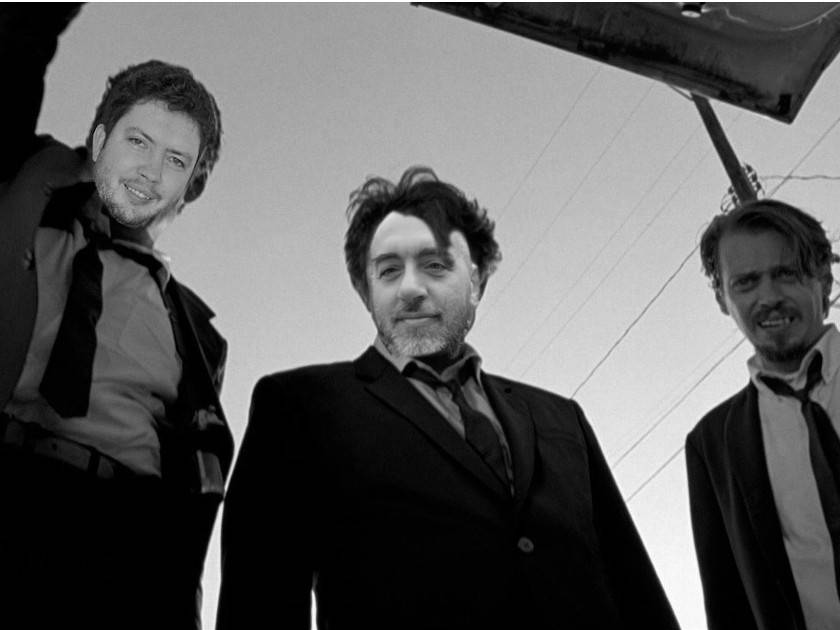
Over the past month, I had the honour of reaching out and interviewing Mauro Longo, the Creative Director at Acheron Games. Archeron Games specialises in tabletop role-playing games that have an Italian spin on them. Their previous games and D&D settings include:
- Lex Arcana – An alternate history roleplaying game in which Rome never fell.
- Inferno – A D&D 5th Edition setting where you follow Dante Alighieri’s epic poem through hell.
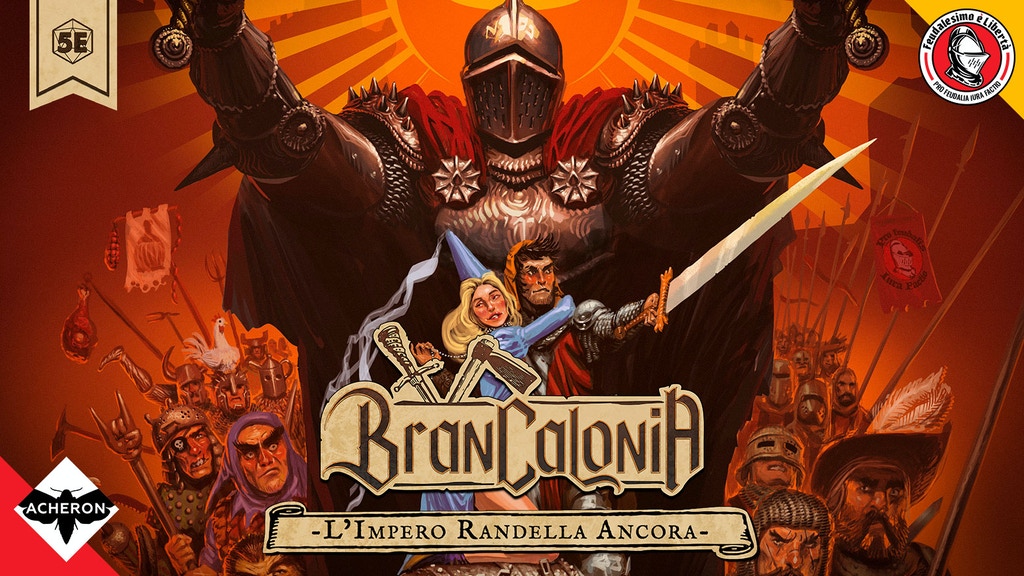
- Brancalonia – Another 5th Edition setting but this time based on Italian folklore, history, landscapes, and pop culture.
In this fascinating interview, we talk about how to start playing role-playing games, what makes Lex Arcana so special, and the differences between Italian, and Western stories.
Hi Mauro, thanks for taking the time out for this interview.
I must admit I’m not super familiar with the tabletop role-playing game scene, but I am fascinated! So I might ask a few dumb questions, please bear with me.
I’m very happy to try and answer your questions. But please bear with my wording, because English is not my mother tongue.
No worries, I’m sure we’ll clean it up in post. Haha. Let’s start at the beginning, how did you get into role-playing games? And when did you realise you wanted to make one?
I fell into it when I was a teenager, like Obelix in the Cauldron of the magic potion, if you know the reference. I used to read a lot at that time, the 90s, and also to play gamebooks, game comics, and choose-your-own-adventure books. Then, a long time ago, I saw a strange, letter-size hardcover book on the same shelf, and I caught it.
BANG!
Down in the cauldron I go.
The book promised epic adventures, wonderful worlds, and legendary quests waiting for me and my friends. So I bought the book (it was the 1st edition of an RPG called The Dark Eye) and gathered my friends around the table. Then on Sunday afternoon… It all began. I also started from the very first day to design and create my own rulesets, worldbuilding and quests.
Fast forward 20 years, to around a decade ago, I managed a blog about my everlasting passions: RPGs, games, speculative fiction and gamebooks. The blog was very famous in Italy, so a publisher asked me to join his company and to try writing some settings, adventures or scenarios for a publication. So I did, and my actual career started at that time with a game called Ultima Forsan, also translated into English, Spanish and Russian language.
I think everyone can relate to a time they got caught off guard by something they love. I’m wondering what your advice is for people who want to start playing role-playing games today.
I’m used to saying this is the greatest hobby in the world because it mixes some of the best things humankind has ever created: storytelling, theatre and gaming. People should not be scared by huge books or nerd conventions. There is a roleplaying game for everyone, and eventually, if you have the “right” experience, you immediately will fall in love with it!
This is what has worked in the last 50 years for millions of people around the world. Any age, culture, tradition, and it will work for anybody: the only thing roleplaying games need is you for an adventure!
To start, just look for a gaming fair or festival near home, or an online convention, and look at the available games. If you like standard fantasy atmospheres, then D&D is always the best gateway to adventure: everybody knows the mood and it’s very easy to be part of it.
In any case, search for something you feel is interesting and look for a nice party, then jump in it! It will be child’s play!
Excellent advice, and then how do you go from being a beginner to using a Dungeon and Dragons setting book like Brancalonia?
Actually, it could be very easy, because Brancalonia is basically a low fantasy and has a “level cap” at the D&D 6th character level. This means that more complex spells, powerful items and crazy-to-fight monsters are out of the game. In other words, Brancalonia is a rural, low-level, ground-floor version of the standard fantasy, very easy to play.
The greater difference with conventional D&D is in the mindset. In Brancalonia you will not play as a greater-than-life hero, always busy with legendary quests, used to glory and victory. You will be a knave in search of quatrains, looking around for someone to rob or similar kinds of jobs.
You should not face any creature you meet. You can not prevail against the law and guards. You are the lower level of the social ladder, and everybody knows it. Run when needed, heal your wounds, keep a low profile and try better next time.
Sounds exciting. While we’re on the topic of Dungeons and Dragons, have you been reading any of the playtesting of One D&D going on? Any early opinions?
I’m following the evolution of the game day by day, and I like a lot the ruleset changes and improvements they are working on. I want our next books to be adapted to the new format. The only thing I’m not so interested in is the incoming digitalization and dematerialisation of the texts. I will always prefer physical books and physical play: the old-fashioned pen and paper gaming on a wooden table full of chips and beverages near the fireplace.
Absolutely, there have been times in my D&D playing where the host has brought out his computer and we play on the screen. It is not the same. But I want to jump back to Brancalonia, congratulations on Acheron’s four wins at the ENNIE’s.
For a newbie like me, could you explain what a setting book is? How do you use it, and what does it add to the game?
I played D&D and other RPGs for decades, and I love their systems, the mood and the experience. Then, as other thousands of players did, I started to create my own world, something other than the “conventional fantasy” we were used to, and a bit more Mediterranean, European, historical, and Italian.
So, after years of experimentation, the “spaghetti fantasy” was born. Brancalonia is to anglo-Saxon fantasy as Sergio Leone’s movies with Clint Eastwood are to John Ford’s westerns. It’s the “Italian way to fantasy” because we put together dozens of Italian writers for the handbook, and we collected our lore from Italian movies, literary masterpieces, contemporary fiction and historical traditions.
What’s awesome is that both Italian and Worldwide players enjoyed the game a lot. To me, this means that the world we created in Acheron Games really hit the mark!
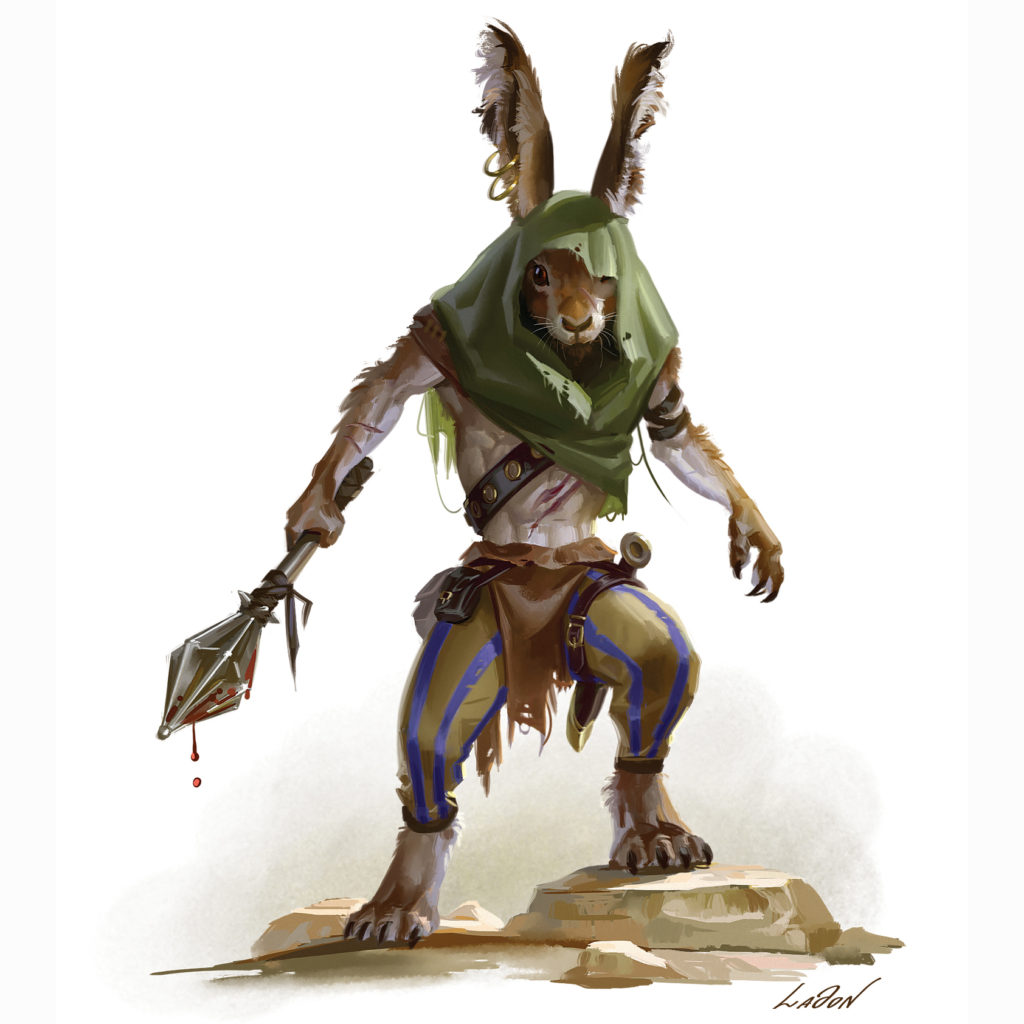
It is heavily based on Italian folklore, but I feel strictly Italian folklore rarely hits the mainstream. So I’m not sure what to expect. Could you share some of your favourite Italian folklore, and what makes it so special to you?
Marionettes, Malebranches, river snake-women, saints, exorcists, giant snails, rabbit knaves, empty armors, blue fairies, hobs of any kind, and talking donkeys OF COURSE.
We put in the game a whole amount of literary masterpieces, not so famous outside Italy: Dante’s Inferno and other parts of his Divine Comedy, folktales from the Decameron, European chivalric traditions, as for the King Arthur and Roland sagas (few know that their oldest mentions are from Italy), Pinocchio, and elements from the creations of Italian Nobel-prize writers, such as Dario Fo and Luigi Pirandello.
Then again, few know that the very first fairy-tale collection of the western world is the Facetious Nights of Straparola, the root of every other anthology like this (Perrault, Grimm Brothers).
We are very proud of having put in Brancalonia monsters, magic items, places and situations from these kinds of literary sources. It’s a way to play with our traditions, our history, our culture, and, at the same time, also a way to let other people around the world know them. This is our vision, our intent.
Taking a step back. I’m wondering how you go about designing a D&D setting like this? What was the original idea when you first came up with the setting? Then how did you build upon that?
You should start – first of all – loving and respecting D&D as it is. If you don’t like “conventional D&D” you will never understand it, and you will never be able to adapt it to your ideas.
After that, you need to start with the setting, the mood and the kind of adventures you would like to put in your setting book. Are they really different from the original source? Or are they just the same thing, with different names for divinities and realms?
My advice is to switch to something different from the original source, but not so much. Focus on 2-3 strong changes and design your version of the game around those, trying to stretch the new ideas to their maximum extension.
After defining this core of new elements, ideas and changes, you need to develop every other detail from that. Do not create too much! Or go too far, as something could break. Work on little things and details you can control and test properly, and then leave players to do the rest at their table.
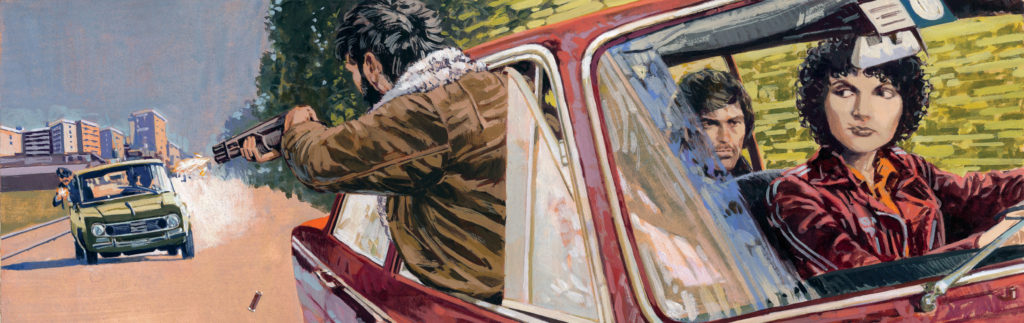
I like that, keep the core the same but change enough so that it’s unique. However, Archeron doesn’t always do D&D settings so let me ask about your latest role-playing game Malavita: An Italian Crime Story.
From the artwork and description, it feels a lot like a Brian Azzarello, and Eduardo Risso comic book, who draw a lot of excellent modern noir stories. But I’d like to hear you describe it in your own words.
Italian crime fiction is a great part of our literary and filming production, from the ‘60s up to today. I don’t know if it ever reached your country, but it’s a bit renowned in Europe, such as the French polar and the northern noir. Quentin Tarantino quoted it sometimes in his movies, Spanish and German audiences are used to localizations.
So the idea is to dig into a very appreciated genre, different from the most common ones, and turn it into a roleplaying game: shootings, robberies, chases, scams, stunt thefts and very tough gunfights.
In Malavita you can play as a smart rogue or a violent gangster (and everything in the middle), but the world around you is brutal and heinous, like in those movies. Players should decide where to stop and what their limits are, before turning themselves into the bad guys.
What makes a crime story strictly Italian? How would it be different compared to if it were an American crime story?
Apart from the vintage dress, the coliseum in the background, and the moustaches, we identified two special guidelines to conceptualise our “Italian style”
The first is “no money for special effects”: unlike Hollywood productions, the Italian movie industry has been the triumph of the art of getting by. Our horror, historical, noir and western films had to deal with ridiculous budgets, where everything was done with mechanical puppets, beet juice and stuntmen taken from the slums.
This approach to provincial stories, secondary events and situations lacking astonishing effects is our distinctive trait, and we flaunt it. It’s very easy obtaining a masterpiece with a stellar budget. But try shooting a western movie in a Sicilian town with extras paid just with a lunch bag, and costumes adapted from common day dress.
We try to capture that mood and atmosphere in all of our games.
The second guideline is the most typical style in Italian fiction: the “mock-heroic” way of life.
From our mediaeval literature to present-day movies, Italians never take anything seriously. Heroes, kings, politicians, soldiers, ideals and, in the end, not even themselves.
Our heroes are always trifler, our kings pompous, our savants dumb. On the contrary, the poorest commoners, if pushed, can pull up their head and perform heroic deeds. The joke and the mockery are always there and every solemn act is greeted by derision. In this cultural trait that has always accompanied us, we see the main stylistic code of the “Italian” stories.
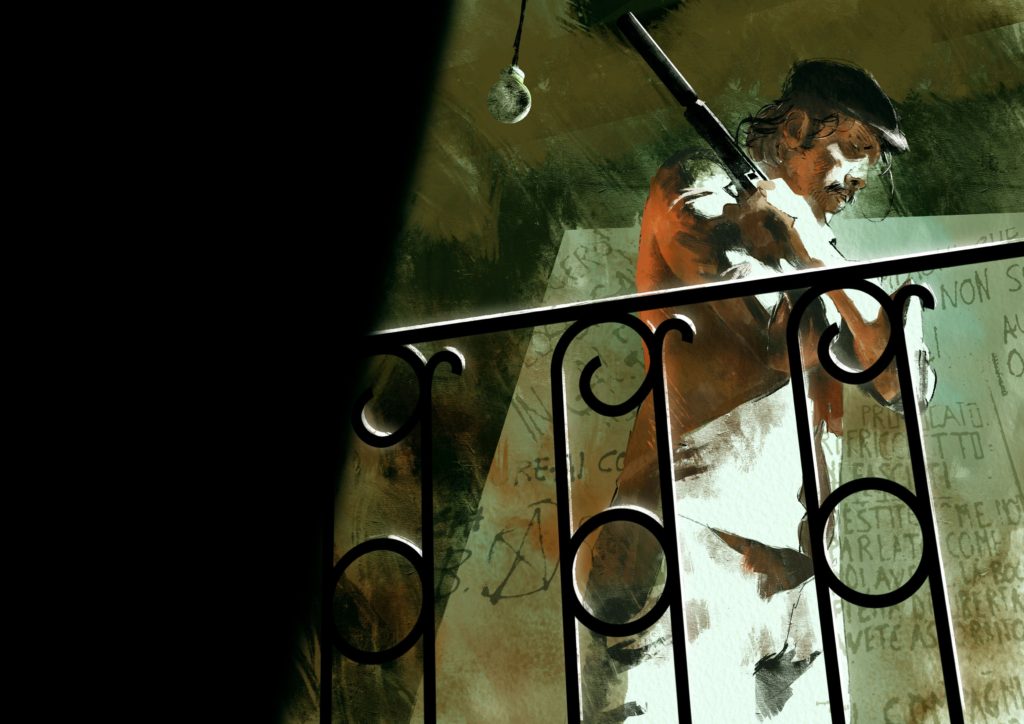
Wow, absolutely fascinating stuff, I’m trying to think what would make something truly Australian, but I couldn’t come up with something so eloquently spoken. Anyway, Maltiva is also based on the dice point system created for Lex Arcana. Knowing only a bit about D&D, could you describe this system?
It’s a system first created by designers such as Francesco Nepitello and Leo Colovini, and we are extremely proud of it. In particular, Malavita uses a standard dice “magazine”, with a calibre of .3, .4, .5, .6, .8, .10, .12 and .20, like the number of the respective dice faces.
The characters’ attributes represent a certain number of Dice Points that the player has available for the roll. More specifically, a Dice Point value indicates any combination of 1, 2 or 3 dice whose highest possible result matches that number. 12 dice points can therefore be transformed into 1d12 but also into 3d4, 2d6, 2d3 + 1d6, 1d8 + 1d4 or 1d5 + 1d4 + 1d3.
When more than one dice is rolled, the total obtained in the roll is equal to the sum of all the individual results obtained. The higher the total, the better.
What happens in game is that the combination chosen also represents the character’s approach to the test:
- Using 3 dice means using a cautious approach, which guarantees a high probability of having average results, without too many surprises.
- Using 2 dice means choosing a balanced approach, between risk and control over the situation.
- Using only 1 dice means risking everything and having a better chance of getting extreme results, for better or for worse.
This way there is a strong and immediate transfer between player and character, and a tactical range of options offered to the players at any scene.
I love that merger of mechanics and character. I think small things like this make games so immersive. Now you’ve got me excited, so tell me, where’s the best place to buy Malavita: An Italian Crime Story?
For the US audience, please buy from our store. For any other audience, you can get the English version here.
Thanks so much for your time so far Mauro, you’ve now made it to the final question. An easy one: what’s your favourite game you’re playing at the moment?
Thank you for your interest in our games!
As for now, I’m working on new Lex Arcana books and adventures, so I’m playing a lot of our Empire Without End.
Apart from our titles, I am enjoying the old-school renaissance in tabletop gaming, and I really appreciated a lot of scenarios for OSE – Old School Essential. Currently, I’m playing one called Falkrest Abbey. It’s an instant classic in the OSR scene, and I recommend it to everyone.
Another massive shout out to Mauro Longo and Archeron Games for allowing for this interview. If you haven’t already, go have a look at Archeron Games’ website, look at their gorgeous artwork, and if so inclined, pick up your next Italian-inspired role-playing game.
You can read more about Mauro and Archeron Games by visiting their website. Or follow Archeron Games on Facebook or Instagram.

 Loading ...