
It was a tough year for the hobby. The price of shipping containers went through the roof due to COVID-19 causing havoc on supply lines. I’m still waiting on games that were released in June! So instead of giving you my opinion on the best releases of the year were. Here are the 10 best board games of 2021 according to Board Game Geek.
For this article, I’ll be using the Geek Rank. This magical algorithm combines the number of rankings, with how high a game is ranked. Therefore, the caveat to this list, is that these ranks aren’t final and will likely change over time.
10. Meadow
Meadow is a beautiful hand-painted tableau builder in which you’re constructing a journey through nature. Observing different flowers, buildings, and animals and scoring points for doing so. This is Klemens Kalicki’s follow-up to Dream Home, a game that won multiple awards in 2016.
Make no mistake though, this is a fairly complex board game. As you’re not only building your tableau, you’re doing it by drafting from a market. However, this market is made of rows and columns of cards, and you can only select a card by using numbered tokens.
Placing these tokens around the outside of the market shows how which card you’ll get. For example, if you played a ‘1’ card on the left side of the market, you’d get the first card on the left. Compounding this complexity is that these tokens stay on the board, clogging up spots and making it harder to get the cards you want.
After you’ve drafted your cards, you then need to ensure you have the requirements to play them. As certain cards can only be played on top of other cards if the cards below have matching symbols. Meanwhile, other cards can only be played if you own the correct symbols on your walk.
As you can see, it’s quite involved for just a walk through the garden. Which is why I prefer to stay inside and sit in front of the TV.

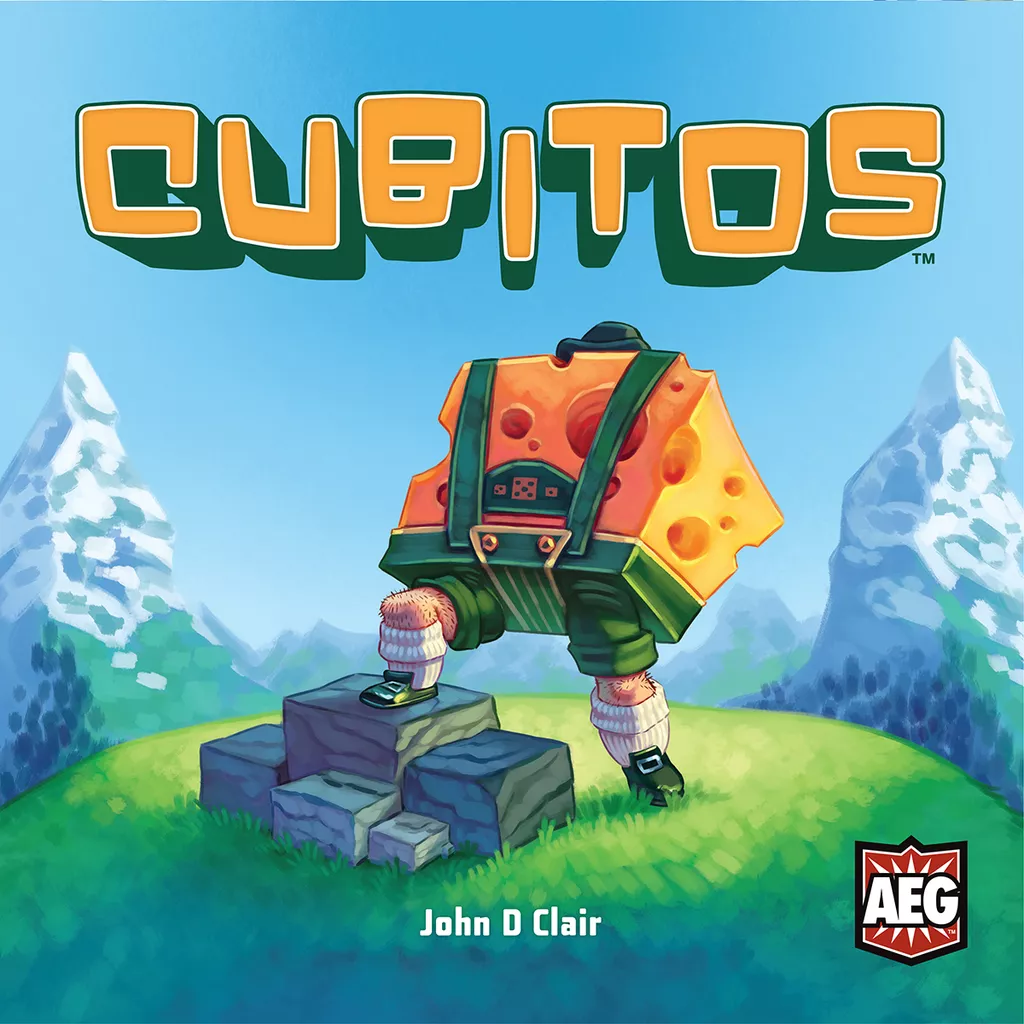
9. Cubitos
Another dice game from John D. Clair, designer of Space Base. This time it’s a racing game, in which you start with a handful of dice that have movement, gold, and blank sides. On your turn, you roll these dice and put aside any that didn’t roll blank side up. Then you have a choice:
Do you roll all the dice that rolled blank side up? In the hopes of getting more, or do you take the benefits from the dice you’ve already rolled? Because if you roll again and all the dice turn up blank, then you lose all the benefits you banked previously.
Never a simple choice at the best of times, but during a race when you’re falling behind. The temptation to chuck these bones again is hard to resist. After you’ve safely called an end to your rolling, you can then use any money earned to buy more powerful dice for your next turn.
They say don’t judge a book by its cover, but I have a guttural reaction of staying away from Cubitos. Something about a sentient cheese block terrifies me. But I might have to get over my fear of living cheese at some point because Shut Up and Sit Down gave it a glowing review.
8. Canvas
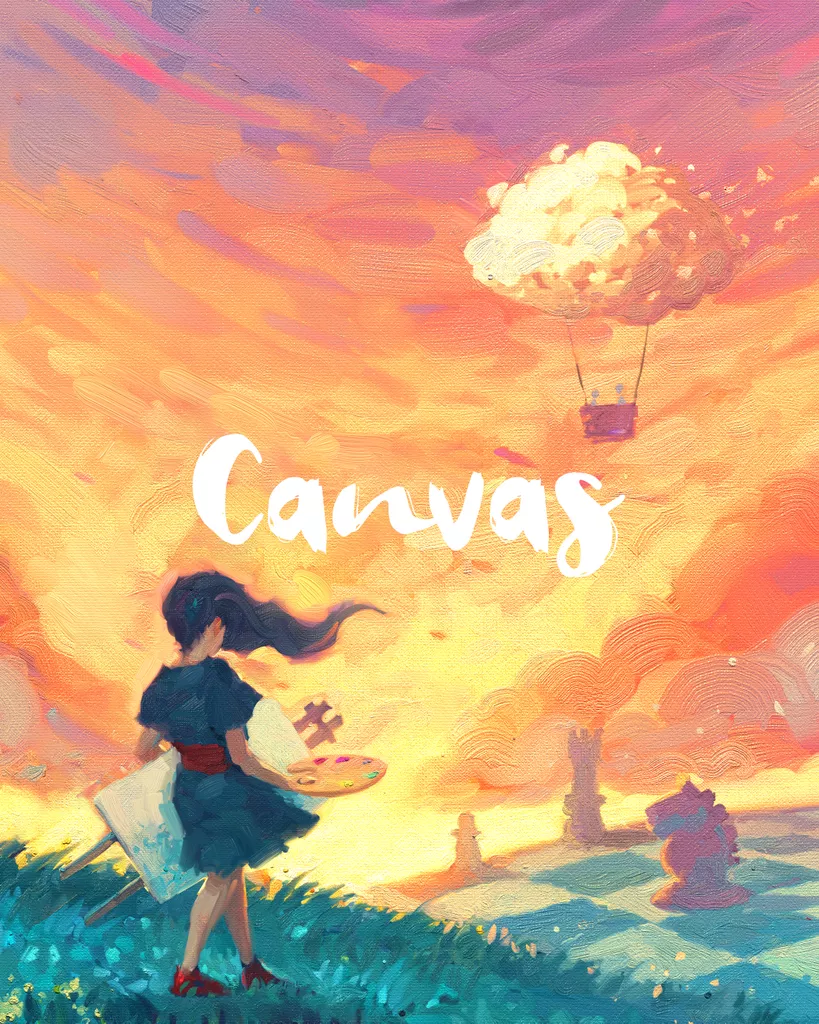
If there is one thing we know about board gamers it’s that they love pretty pictures. No game comes as close to the prettiness of Canvas. Well, not exactly true as Dixit comes pretty close!
In Canvas, you’re trying to make the best-scoring painting based on a random set of criteria drawn at the start of the game. You’ll draft cards that have their own symbols and special abilities, trying to pair together three of them to create a set that gives you the most points based on the criteria.
The thing that makes Canvas stand out is its use of transparent cards. So for instance, you start with three background cards – these are card sleeves that hold three cards within them. Then the cards you draft, have art on parts of the card, while the rest of the card is a transparent film. By placing three of them in the background card, you’ll create a unique piece of artwork.
There’s a strategic component to this as well. Because if you place a card on top of another, you might just remove some of the symbols on the card. So in terms of board gaming goodness, Canvas is more than just a pretty face.
7. Oath: Chronicles of Empire and Exile
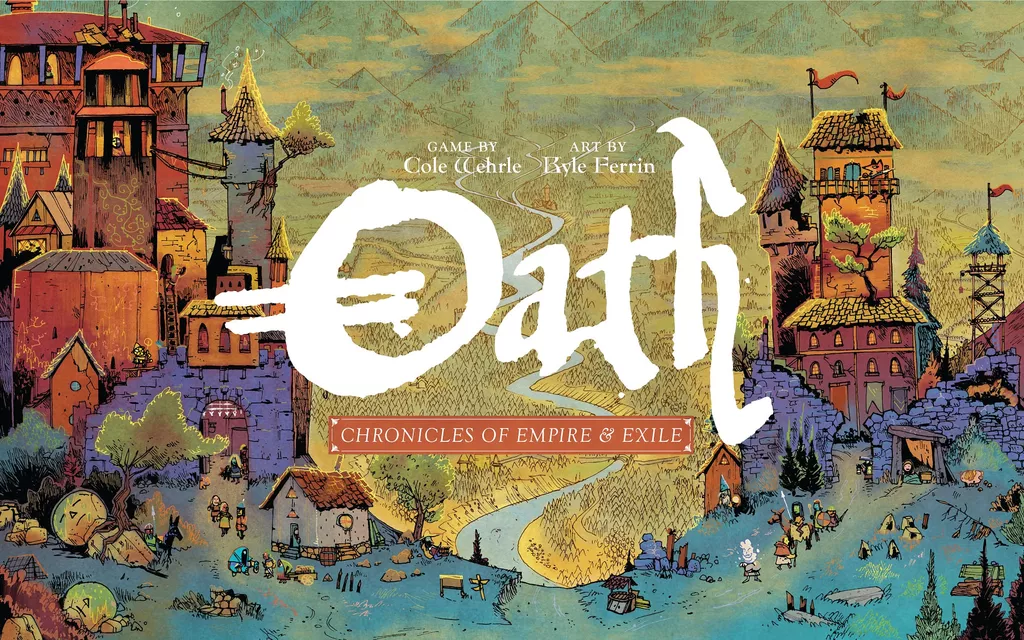
Oath: Chronicles of Empire and Exile was destined to be a hit. Produced by Leder Games, and designed by Cole Wehlre who’s made a name for himself with Root, John Company and Pax Pamir Second Edition. Oath is an asymmetric game where you’re collectively creating the rise and fall of empires.
One person takes the role of the monarchy, whose sole goal is to hold onto the power they’ve got. While everyone else decides if they support the monarchy – and try to become royalty from within, or become an inspired leader rising from the outskirts.
This serious theme is dulled by Kyle Ferrin’s cartoony art style. Although don’t let it fool you, Oath is the most complex game on this list. It’s also my pick for the best board game of 2021, because of the mad rush to the ending, the way it remembers previous games and the wonderful memories it creates.
6. Destinies
This is the biggest shock to the list so far. Generally, these heavy story-driven games are for a niche audience within an already niche hobby. However, Destinies has broken new ground with its app and QR code integration. Taking away a lot of the complexity these large games tend to bring, as well as introducing voice-over work to help deliver the story and set the scene.
We’re not unfamiliar with app integration for these games, with The Lord of the Rings: Journeys in Middle Earth released in 2019. However, the QR Codes on most cards and boards give the app additional context. And with this context, it can provide a more immersive story for the players.
Set in a medieval fantasy universe, Destinies has the players explore and adventure out into the world to fulfil their destinies. However, the players all have a choice of two destinies to fulfil. While they do that, they’re also being secretly judged on how virtuous they are within this world of darkness.
Although it’s a competitive game, the real reason to play these RPGs is for the story, and by all accounts, Destinies nailed this aspect.

5. Terraforming Mars: Ares Expedition
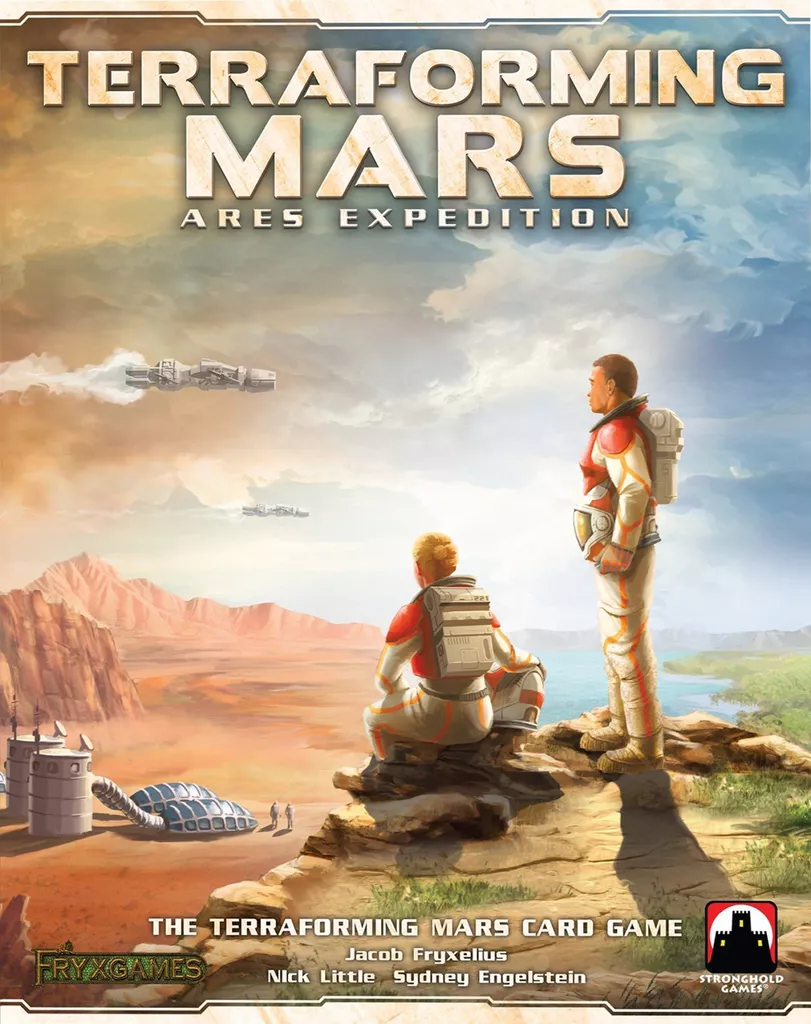
When they announced a streamlined version of Terraforming Mars the feedback was divisive. The purists didn’t want their great game tarnished by offshoots, while others were looking forward to not spending 3 hours transforming the red planet. Well, given its position in this list, the verdict is in. Terraforming Mars: Ares Expedition is a success.
Like its predecessor, you still need to change Mars’ temperature, oxygen levels, and water levels to make it habitable. But everything is shrunken down. For example, cities are no longer a thing, and when you build a forest you get a victory point token instead.
However, the biggest change is the action selection phase at the start of every round. Where players pick one of the five phases they’d like to play, and only the phases chosen will be played. Meaning that you’re not going to be producing from your engine every round, only when that phase is chosen.
But otherwise, the gameplay is much the same, you’re still buying and playing cards to your tableau, and managing your resources to the best of your ability. Only now in a much shorter play time.
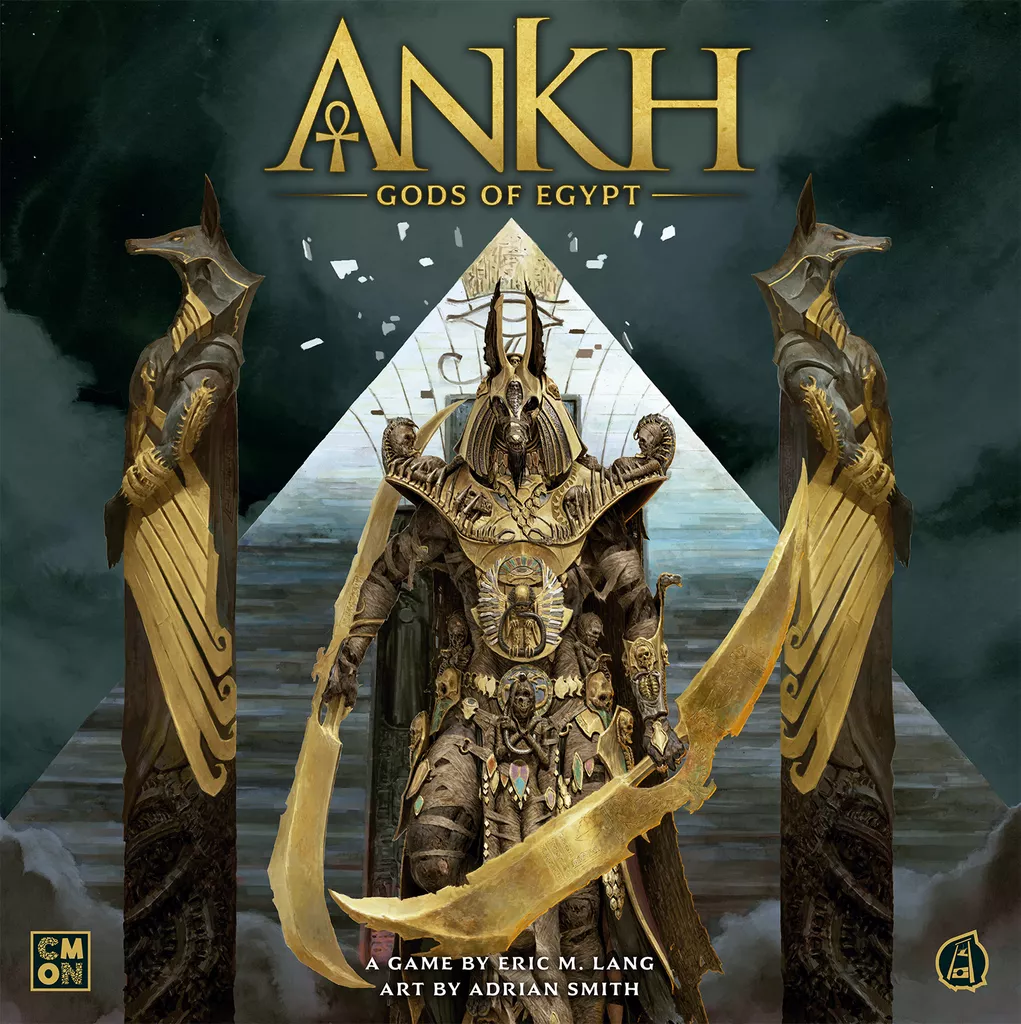
4. Ankh Gods of Egypt
Following in the footsteps of Rising Sun and Blood Rage comes the next massive Eric Lang dudes-on-a-map game, Ankh. This time the battle takes place in Egypt where you’ll fight other gods to earn devotion from your followers and become the last remaining deity.
However, you can’t just go around beating up other gods willy-nilly, as it’s very structured in the way that you do battle. Every player has action boards that together countdown when the next battle will take place. So you have a lot of time to posture and strategize before any blood gets spilled.
You’re looking to dominate, or fight over, territories and the monuments they hold. It’s only when you control the territory, and the most monuments of the same type within the territory, that you get devotion.
While this sounds stock standard for an area control game, there’s one wild mechanic that’s more divisive than pineapple on pizza. That’s the merge mechanic. After a certain amount of game passes, the bottom two players merge. So they are no longer in control of one god but share a god together.
That’s wild.
As with other games in this trilogy, the models and components look godly, and aesthetically this will be the centrepiece of any collection.
3. The Crew: Mission Deep Sea
A sequel to the hit card game The Crew: The Quest for Planet 9, The Crew: Mission Deep Sea is dangerously close to having a title as long as an isekai manga. Yet as a card game, it follows in the footsteps of its predecessor.
It’s still a cooperative trick-taking game and has a campaign of 32 scenarios for you and your group to play through. However, you probably won’t play through these scenarios. As this iteration includes a challenge deck, which lets you shuffle up and deal out objectives quickly. So you can get to playing faster.
This challenge deck is not to be underrated. Firstly, it’s thick and full of variability, and secondly, it’s incredibly well-balanced. With the difficulty of the card on the back, you can choose if you want an introductory game, or if you want to finish bloody and bruised but content from beating an extremely tough challenge.
I went into The Crew: Mission Deep Sea without a clue or care about trick-taking games. After playing it several times, it’s now a go-to, and one I strongly recommend.

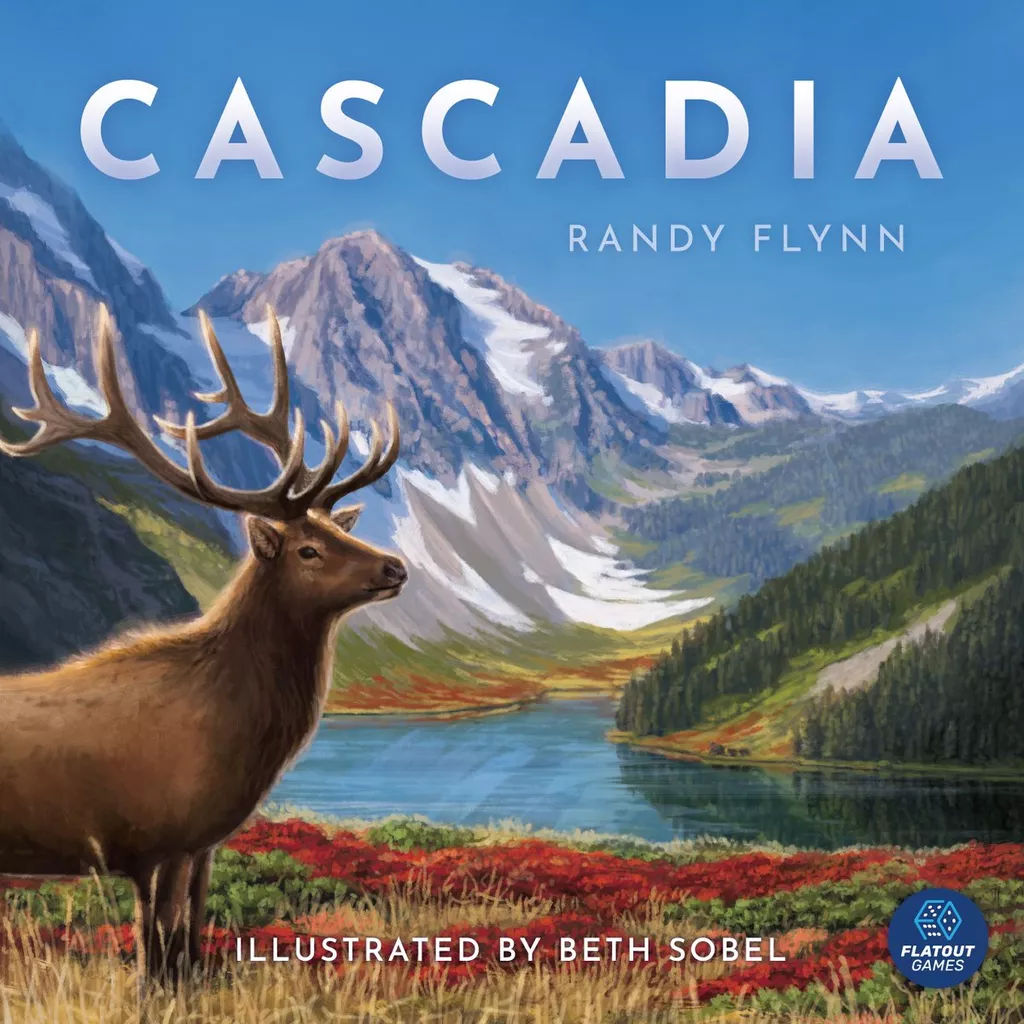
2. Cascadia
Designed by Randy Flynn, Cascadia is published by Flatout Games. If that name sounds familiar it’s because they recently put out Calico, the game of cute comfy cats, and tough crunchy puzzles. Similarly, Cascadia is also a tile-laying game, where each tile depicts both a terrain type and an animal that can live there.
Throughout the game, you want to connect tiles together so that their terrain types match. The crunch within Cascadia comes from the draft. While you pick and choose what tile you want, these tiles also have an animal token riding shotgun. And of course, these animals have their own scoring mechanisms in place.
This leaves you in a purgatory of compromise as a pair might have the animal you need, but not the terrain. Or have the terrain you want, but not the animal.
Even still, Cascadia allows for more freedom in your tile placement than its predecessor. But continues to offer up great decisions as you decide where to put your bears.
1. Sleeping Gods
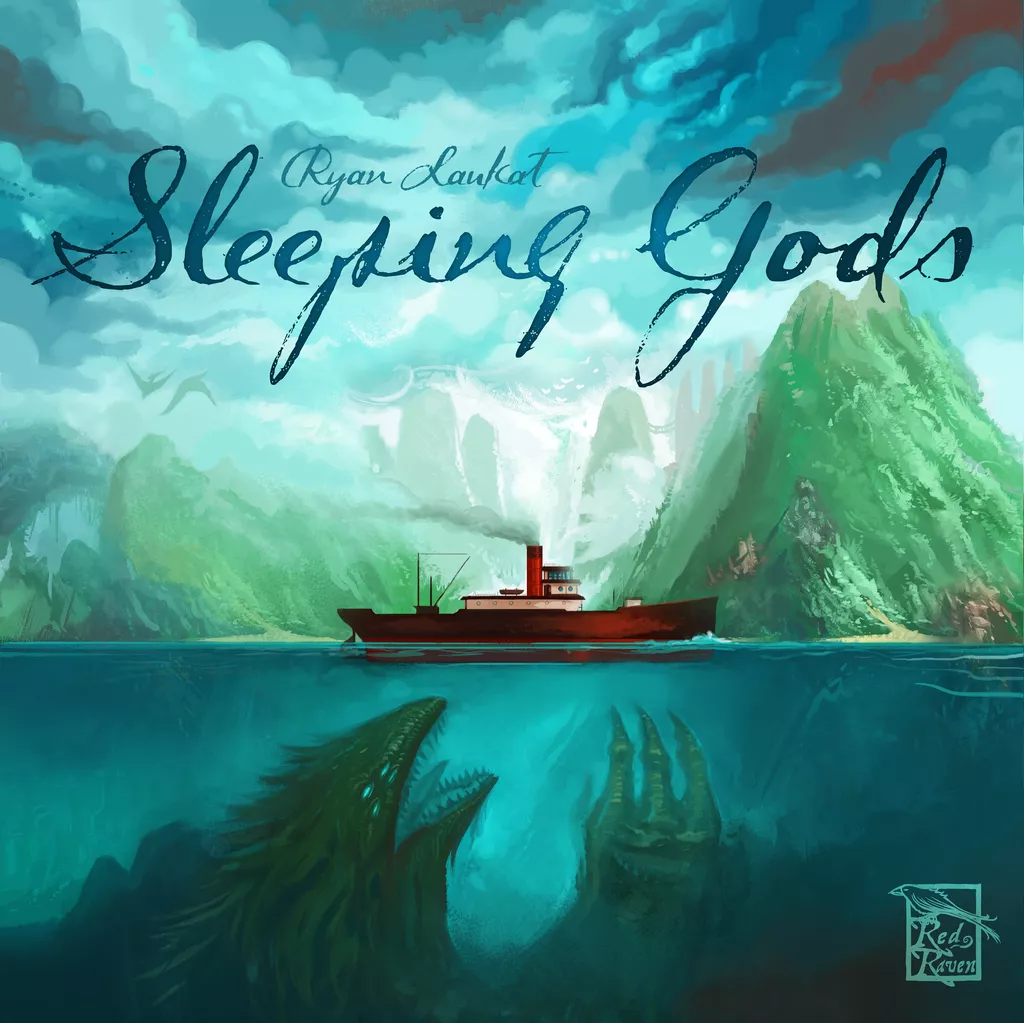
Over his career, Ryan Laukat has designed and produced several excellent games that blend narrative storytelling with deep Euro-style mechanics, such as Above and Below, and Near and Far. To date though, they’ve all been competitive.
Sleeping Gods is the first cooperative game Ryan designed, and it’s also the first continuous storybook game. This innovative new mechanic works like a street directory, where while each page is part of a world map when you exit one side of the page it tells you which page the map continues on. So in this way, the world is never-ending, and as you play a ship upon the water you can go anywhere you want.
Sleeping Gods uses this mechanic to create a seamless 13+ hour journey, where you go from island to island. On each island, you go on a narrative adventure, hoping to find a hidden totem that will lead you to freedom.
Overall, I’m not surprised to see this at the top of this list, given I picked it out for one of the games to look forward to in 2021.
Want to see how the rankings evolved?
If you’re tracking how the top tier has shifted over time, explore our full BGG Top 10 Archive. We break down the highest-rated releases, standouts, and heavy hitters year by year.
That’s all she wrote for 2021. Plenty of amazing board games that I can’t wait to play.
Was any game on this list that you think shouldn’t have made it? Let me know in the comments below. Otherwise, be sure to also check out the best board games of 2020.

 Loading ...

And how did that sentient cheese block get those lederhosen on without any arms????
I’m out here just commenting on board games. Meanwhile, Anton is asking the real questions.
Make sure to report back on your Sleeping Gods adventures. Can’t wait to get your opinion.
Dave, I’ll try to do that — we are trying to schedule the start of a campaign right now with two friends. I’m ready to rumble!
I just got Sleeping Gods, and boy do I want to get a campaign going! I’m excited to hear all the stories.