
Ladies and gentlemen of the jury, six months ago I attended a work event. As an icebreaker exercise, a simple copy of Uno was given to each table of six people and 45 minutes to play.
As I recall, every single person at our table confidently stated they knew the rules. However, it quickly became clear that no one knew the correct way to play.
Were they all committed to purgery or mass hallucination?
No.
They were simply run afoul by the house rules ingrained into their brains from previous plays. I don’t profess to know the rules of Uno, but it was fascinating seeing all the variations people would play. Then quickly justify with the magic words, ‘That’s how I’ve always played it.’
By the end, there were several disagreements with some people visibly shaken by the experience.
This is Exhibit A in my case against house rules.
How can we play games together if we can’t agree on the terms of our social contract? When playing, we all agree to do our best within the system the rules create. But if this system changes for each player based on their known house rules then mass confusion ensues (as seen with this icebreaker).
Exhibit B is a tad more theoretical. It starts by saying I’m not a game designer and (most likely) neither are you. We don’t have the expertise or experience in the world of game design.
Additionally, before a board game reaches your table, it will have gone through months of playtesting and dedicated thought to the rules and systems.
There’s something narcissistic in thinking you can create a better ruleset than the original designer. Unless, of course, you spend equal time thinking, testing, and balancing.
Even then, in most cases, house rules negatively affect the intended experience.
While it might sound counter-intuitive, board games are so interesting because they provide you with a system with clear boundaries. It’s up to you to push these boundaries or work within them to produce the best result.
In changing these boundaries, you’re affecting the whole system in ways you might not know. How many times have you read about or played with people disregarding the rules of Monopoly? Turning the game into a 3-hour slog of PTSD waiting to happen.
The prosecution rests.
In Defence of House Rules
My colleague in the prosecution would have you vilify house rules as a nuisance to society. But let me testify that you can’t paint them all with that broad brush.
For instance, is it not acceptable to remove complex rules? Especially when learning the game, or playing with children.
As designers continue pushing the limits of what can be done at a table, board games are becoming more complex than ever before.
But with this complexity comes new ways to disseminate rules. You have tutorial campaigns, as we see in Revive or advanced modes like the one in Trekking Through History. Where you’re meant to play it once using the basic rules, and then immediately switch to the advanced version.
Enough board games are doing this these days, that I’ve started doing it myself. Stripping out the more difficult rules of games when playing with first-time players. Adding them back in once we’ve played a few times or a few rounds into the game.
Another interesting question arises about playing a game with foreign rules. Are these considered house rules? Technically they’re still the proper rules for the game, just not the ones that came in the box.
I have a good example in Mysterium.
When translated for the English-speaking audience, they added a lame ‘guess if your friends are wrong’ mechanic that slows the game and ruins its cooperative vibe.
So if you ever play with me, this rule is getting removed. No if or buts about it!
Lastly, there’s one final acceptable reason for house ruling.
Take this example, you’re playing a game of Arcs when someone destroys a city forcing the city back onto someone’s player board. They already have a full player board of resources. Do they lose a resource to make way for the city? Or does the city only get added back once they’ve made room?
It’s not your typical interaction, something you may only come across once in a few games. So I didn’t have the answer off the top of my head. I went to the rulebook – because I remember they called out this scenario specifically. But couldn’t find it.
I spent a couple of minutes browsing, but without an answer, I made a house rule so we could continue playing.
However, that’s with the promise that between games I would find the answer and we would play correctly next time.
For this example, it turns out the player has to return resources to make way for the city (pg. 17 of the rulebook).
Altogether we can surmise that not all house rules are evil. In some specific instances, they may even do some good. Therefore, the defence rests.

Closing Arguments
There are definite use cases for house rules. But the main worry stays the same. People who change the core experience of the game on their whim to create a sub-par game experience as a result.
We’re in an era of board games where so many are available if you don’t like one, you can find another that does precisely what you want. A game that’s already gone through the rigour of design and testing and doesn’t need your input to make it great.
That said, when you buy a board game you want to get the most enjoyment out of it as you can. If that means creating house rules, then go for it. Just know if you did that at my place, you would be sent to jail.
No questions asked.
While drafting this article, I found it interesting that there’s such a stark difference between TTRPGs (like Blades in the Dark) and board games when it comes to house rules.
Even though a TTRPG rule book can be 2-300 pages long. What they teach is how to make rulings, rather than specific rules. Especially fiction-first roleplaying games that let you, as game master, bend or create rules as you want to fit the fiction at hand.
An example from Blades in the Dark is one of my party members wants a bionic arm. Now, nowhere in the rules does it have a section on that, but it does have a loose section on crafting items. So using that, I can create the rules on the fly to make this player’s dreams of a super-powered arm a reality.
It’s a fascinating approach to rules. But what gets me is that board games and TTRPGs are often lumped together. Yet how they treat rules, and systems is so categorically different.
Anyway, you’ve now heard both sides of the argument (and where I stand). Now it’s over to you the jury. Do you use house rules?
 Loading ...
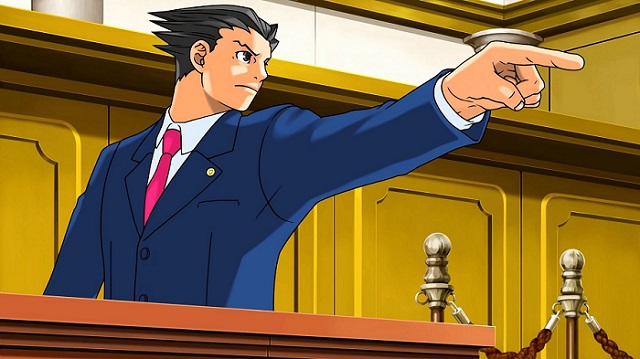
Picture of Phoenix Wright is a screenshot of Phoenix Wright: Ace Attorney Trilogy




Dave, I put that I Never use house rules, and that is generally true, but your comment about reducing complexity for new players and then adding back in the full rule spectrum is a potential (emphasis on potential) exception. I think a lot hinges on how well the teacher prepares everyone — to know what to expect, some ideas of how to succeed, and, I think, the theme and goals/purpose of the game really can make a difference as well. Then give the rules overview. I will sometimes not add in smaller detailed rules until the situation arises on the board. Then I’ll stop things, explain the relevant actions and rules, and then let them decide how to proceed. If they ask, I am happy to also suggest some strategies (think Brass or Voidfall…..). I always view my first game with new players as a “learning game”; I don’t really play hard to win, and I view myself more as a teacher than a player. I think these things also reduce concerns about house ruling. This is an interesting arena for discussion!
Great comment Anton. I feel like my teaching style has changed from having that large upfront rules dump to – how can we start playing immediately? Which is why I’m opting more and more to take a few rules out of complex games whenever I bring them to the table.
Also, interesting from your comment is I rarely feel like I am a “true” player, as I’m constantly having my thought processes interupted by rules questions. Or I’m analysing the board both in terms of strategy, as well as keeping an eye out for people doing something odd, or unique that doesn’t fit within the rules of the game.
Hmmm.. that’s given me a lot of food for thought.