
When I first dipped my toes into modern board gaming over a decade ago, the choices were surprisingly limited. The Settlers of Catan stood tall as the undisputed champion, but finding other board games that suited your table was a real challenge.
Back then, board games weren’t released as frequently as they are today, and stores weren’t nearly as well-stocked. Most retailers only carried a handful of specific titles, and if you wanted something outside that narrow selection, you had to scour the internet, turning over every digital stone in search of hidden gems.
My journey into modern board gaming began with Cranium. Among my friends, it’s affectionately known as “Trivial Pursuit on drugs.” While it retains the classic trivia element, it injects a variety of creative minigames, making it not only more engaging than its predecessor but also a guaranteed source of laughs.
Cranium tapped into my nostalgia, as my brother and I frequently played Trivial Pursuit when we were kids. Of course, being as young and competitive as we were, it usually started as trivia and ended as a full-blown test of strength, with us wrestling over the final plastic pieces.
After Cranium, my housemate introduced me and my friends to Munchkin. While it was fun for the first few games, the novelty quickly wore off when matches started dragging on for over two hours. Still, it had its merits – most notably, it inspired me to pick up The Settlers of Catan when we visited Supanova, an Australian pop culture convention.
And that’s when the board game itch truly began.
From there, I’ve been on a quest to explore new games and experiences in the ever-expanding world of board gaming.
But enough about me—this is about you! What was the game that first drew you into the world of board gaming? I’ve rounded up four of the most popular gateway games, but if your introduction came through something different, let me know in the comments—I’d love to hear your story!
Settlers of Catan: The Original Gateway Game
For many, myself included, The Settlers of Catan marked a paradigm shift in how board games could be played. Unlike classics like Monopoly, Candy Land, or Trouble, which mostly revolved around rolling dice and moving pieces, Catan introduced a world of strategy, negotiation, and planning.
While these elements are commonplace in modern games, back in 1995, when Catan first hit the shelves, they were revolutionary—especially for newcomers to the hobby.
Despite its innovative mechanics, The Settlers of Catan remained approachable and easy to learn. This balance of depth and accessibility catapulted it into the spotlight, securing its place in the annals of board game history.
Today, Catan continues to be a dominant force in the hobby, extending well into mainstream pop culture. With over 32 million units sold worldwide, it’s been referenced in everything from casual conversations to iconic TV shows like The Big Bang Theory, where the classic Catan joke about trading sheep for wood received top billing.
Munchkin: A Humorous Introduction
Given the sheer variety of new games and mechanisms in modern board gaming, it’s remarkable that Munchkin still holds such a prominent place in the industry. Yet for many, Munchkin is the game that introduced them to the world of modern board games, earning it a special place in their hearts.
This lasting popularity shouldn’t be too surprising. Since its debut in 2001, Munchkin has spawned over 100 different versions and more than 180 expansions. Whether it’s Munchkin Marvel, Munchkin Mission Impossible, Munchkin Harry Potter Deluxe, or even Munchkin Mars Attacks, there’s a flavour of Munchkin for just about everyone. That variety is a big part of its appeal—it draws players in by tailoring the experience to their favourite franchises.
But the franchise’s success isn’t just about variety. Munchkin‘s playful, tongue-in-cheek humour that parodies RPG stereotypes, or the theme of the version is another reason for its lasting charm. While its gameplay can be divisive, players can still delight in the witty artwork and clever descriptions that bring the cards to life.

Ticket to Ride: Mass Appeal in Action
The popularity of Ticket to Ride is something of an anomaly. Released in 2004, it didn’t have the pop culture backing of Munchkin, nor did it revolutionise the hobby like Settlers of Catan. Yet, despite all that, it became a runaway success.
What Ticket to Ride had – and still has – is mass appeal.
Whether it’s your first time playing a board game or you’ve been immersed in the hobby for years, Ticket to Ride offers an experience that feels approachable yet satisfying. It bridges the gap between casual players and enthusiasts, creating a shared enjoyment that’s rare in board games.
Since its release, Days of Wonder has gone all supporting and expanding the franchise to include 21 versions and variations, with no signs of running out of steam.
Wingspan: Modern Elegance
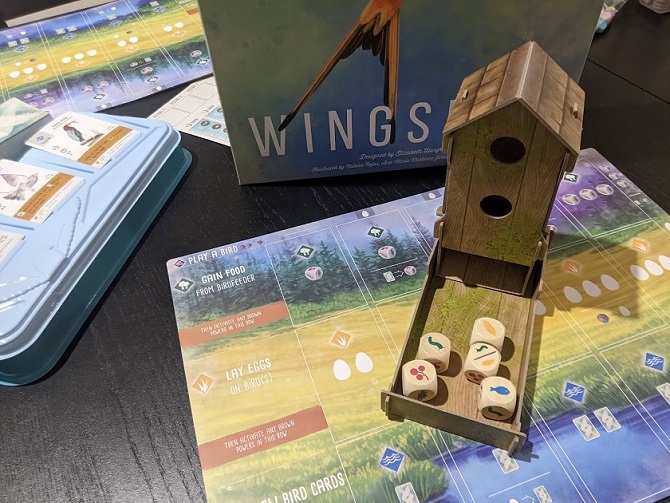
Wingspan took the board gaming world by storm when it was released in 2019. Like Catan and Ticket to Ride, it showcases the potential of modern board games. With its bird-collection theme and Beth Sobel’s stunning artwork, it strikes a perfect balance between approachability and depth, making it accessible to just about anyone.
In many ways, Wingspan ticks the same boxes as its predecessors: it serves as a contemporary representation of modern board game design while being endlessly inviting to newcomers and veterans alike.
Its success is further boosted by Stonemaier Games’ exceptional production quality, marketing and brand. They did a wonderful job of turning this bird-based game into a golden nest egg. Creating a game that’s as visually captivating as it is fun to play.
Though it’s the newest of the four games I’ve highlighted, Wingspan has already established itself as a gateway to modern board gaming—one bird and one egg at a time.
Vote now and see what others chose as their first board game – click below to join the poll!
 Loading ...
If none of the games on this list match the one that sparked your love for board gaming, I want to hear from you! Let me know in the comments below – I’d love to hear how your journey into this incredible hobby began.




King of Tokyo / Lords of Waterdeep /Splendor were the games that brought me back into gaming (loved Warhammer /Stratego / Risk and others as a child/teen). Of the games on your list, I’ve used Ticket to Ride (Europe) to bring train enthusiastic friends into the hobby but not the others.
That’s awesome to hear. Lords of Waterdeep is one of those games I’ve always been curious to play, but never got around to. I find what works best is to find a game that matches your target audience. I’ve read about people being brought in with Terraforming Mars and Game of Thrones as their first game (although that seems crazy to me.)
Do you still play any of the games that brought you back into the hobby? Or have you moved on?
David, I will have to take a look at Le Havre online! I appreciate that reference!
I think that Anachrony and Perseverance are pretty close in complexity although adding in the final expansions including Fractures of Time upps the score on that for Anachrony. CoB is a classic, for a reason — but it is easier to learn how to play; playing well can be a bit more of a challenge. 😉
Dave, fun poll and thoughts. I know this makes me sound VERY old, but I started with board games probably around 1976 or so? Although if you count Monopoly and Risk which I would not consider the parents of modern board games, I was playing those even earlier than that.
I consider my first genuine tabletop games to be Avalon Hill war games such as Afrika Corps, France 1940, and later on, Russian Campaign, Squad Leader, and others. They were wonderful to play and taught me a lot about history, which is one of the major benefits of playing war games, I think. Then there was a pause, and later on I got involved in Warhammer, Warhammer 40K, and also a spate of terrific card games including Magic, Warlord, Legend of the Five Rings, and others. All of those led me to more modern games. I can’t recall which of the modern games I first picked up on, but Ticket to Ride, Agricola, Le Havre, Caylus, and other such as Ra, led me to where I am today. The advance and growth of modern games has truly been amazing to watch.
This reminded me of my Magic the Gathering phase that I had during junior school. None of the other junior school kids were into it, so me and another friend went up into the highschool every lunch time. Do you still own any of: Ticket to Ride, Agricola, Le Havre, Caylus, or Ra? Or have you found your tastes changed since then?
David, I’ve kept some of the older entry games, mostly for my grandkids (hoping), and also to use to introduce to people who are not aware of the modern game environment. We still have TTR USA (with 1910 expansion); we also have Märklin which may be our favorite, and the Asia expansion. That gives enough variety, I think to be able to share with many others. I have Agricola, Caylus, and Ra on my iPad, and am working to get more people to play with me online. 😉 I sold my old version of Ra because I had trouble getting people to play it, and I very nearly backed the deluxe upgraded version (I keep thinking about still finding a copy). I don’t think Le Havre is available digitally? So, I have stuck with many of those original, older games for those reasons, plus I still enjoy them. I have also upgraded Wingspan components and added expansions — I think Oceania REALLY makes the game even better. Many people love to play Wingspan after I introduce them to it. I know you’ve written about Ethnos vs. Archeos Society — I have had tremendously good luck/opportunities to intro people to modern games using Ethnos. All of this said, I really do love my crunchy games — Voidfall is my current brain burner; amazing game! I also really love to play Perseverance, Anachrony, and the deluxe version of Castles of Burgundy has knocked my socks off! Pest also just arrived, and I really want to get it to the table.
I have good news for you Anton, Le Harve is available digitally. At least on the google store.
Thanks for sharing your thoughts, I think the only game I have from my early days is Carcassone. Everything else has been replaced or removed :(.
Absolutely agree about Wingspan’s Oceania expansion, makes it a lot easier to fill your board with birds and removes the need to get so many eggs. It’s a great expansion. I got to play Wyrmspan last week, and I need to play it more, but first impressions are good. Might even take the crown from Oceania 😮
Also had a chuckle to see Perseverance, Anachrony and Castles of Burgundy in the same sentence. They seem to be on very different complexity levels.
Finally, I hadn’t heard of Pest, but I looked it up and it seems cool. Thanks for the tip off again!